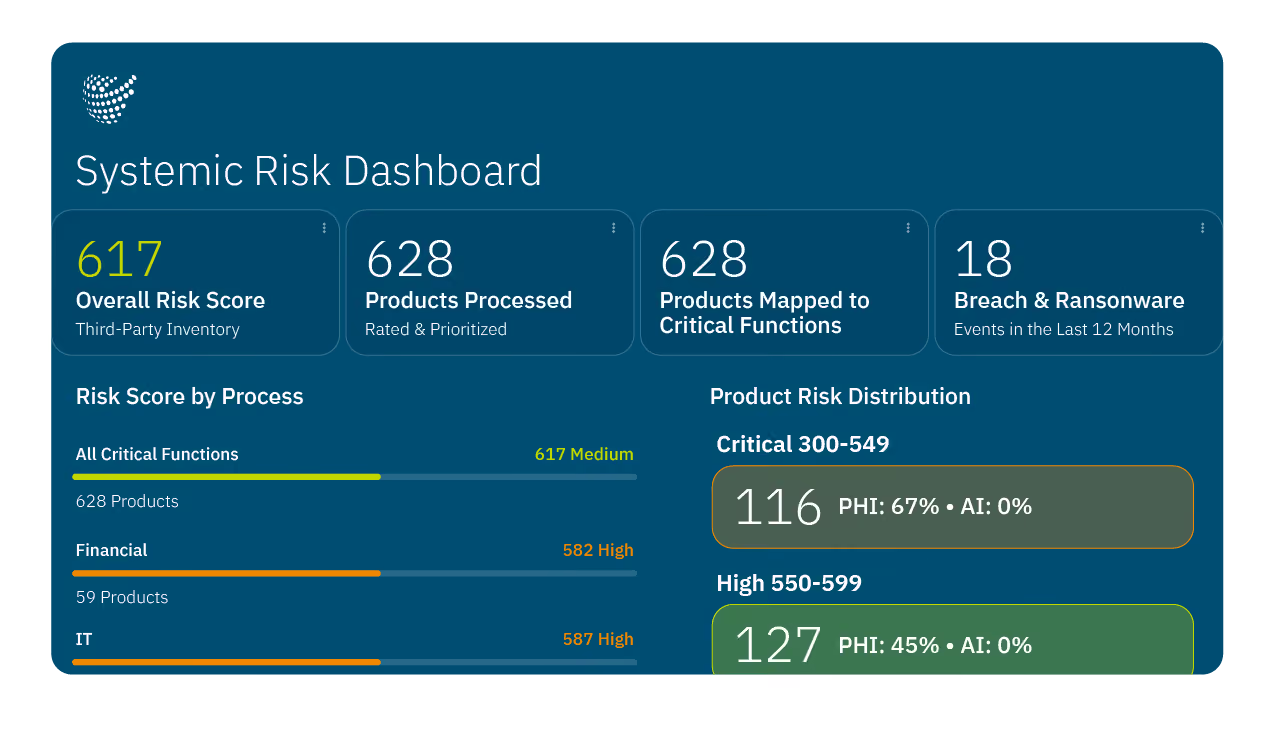
Your risk managers assess and score every vendor — but can they identify which vendors support critical operations, where dependencies concentrate, or which services lack redundancy?
Traditional TPRM identifies vendors. It does not reveal operational impact across patient care, revenue cycle, clinical operations, or business continuity.
Censinet helps healthcare organizations identify systemic exposure before disruption forces the question.
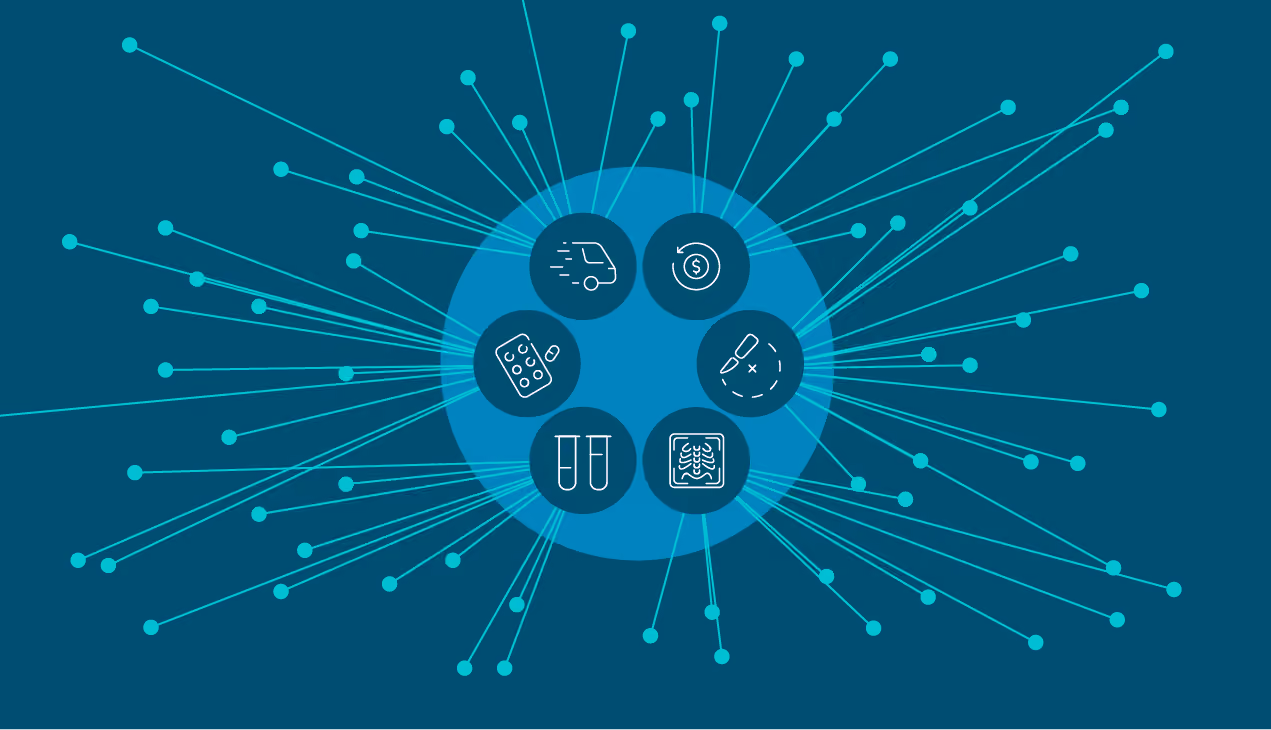

Critical function mapping has traditionally required months of manual research, disconnected spreadsheets, and incomplete inventories.
Censinet operationalizes all 17 HSCC critical functions directly within the platform, automatically connecting vendor and product dependencies to critical healthcare operations.
Exposure is visible from day one — before a single assessment is created.
Once operational chokepoints and concentration risks are identified, Censinet transforms those insights into structured mitigation and resilience planning.
Systemic exposures flow directly into the Risk Register for prioritization, ownership, and remediation tracking. Business continuity planning becomes anchored to real operational dependencies instead of static vendor inventories.
Leadership gains a clear, defensible view of systemic exposure:

A vendor assessment evaluates the risks and security controls associated with an individual vendor, product, or service. Systemic risk looks across the ecosystem to understand how third parties support critical healthcare operations and what could happen if a shared dependency fails. A vendor may have strong controls and still create significant operational exposure if many essential workflows depend on it or if no practical alternative exists.
Censinet maps every product in your inventory to the clinical and business processes it supports, then scores each product before any assessment is completed. The result is a single view of where risk concentrates across your organization, with the processes carrying the most exposure ranked highest. From there, teams can see the products behind any process and move directly into starting an assessment.
Yes, and this matters because a product's public description does not always match how your organization deploys it. Censinet generates the initial set of processes for each product, and your team refines them: adding processes the product supports in your environment, removing ones that do not apply, and recording the reasoning behind each. Every change is attributed, and the closer those mappings match reality, the sharper your view of where risk sits.
Censinet projects your product inventory onto the 17 critical healthcare functions defined by the Health Sector Coordinating Council, using its Sector Mapping and Risk Toolkit. Each function is a map of the supply chain that supports it, with your vendors placed on the points they support. From there you can see where a function has no alternative provider, where one vendor supports several points across your environment, and where a vendor dominates the market with few alternatives. Your product inventory tells you who your vendors are. These maps show what breaks if one goes down.
No. Once your inventory is in place, Censinet maps and scores your products using information already in the platform, public sources, and network intelligence, before any questionnaire goes out. Assessments add depth over time. This early view helps organizations decide which relationships and dependencies deserve attention first, rather than waiting months for assessment coverage to build.
Censinet tracks what share of your high-risk products supporting critical processes have completed an assessment, reported separately for standard assessments and AI-specific assessments. That answers what leadership actually asks, which is whether the most important work is getting done, rather than how many assessments were completed overall.