
Enterprise Risk
Enterprise Risk Can’t Be Governed in Silos
Healthcare organizations manage risk across clinical, operational, regulatory, and technology domains. Too often, oversight remains fragmented across teams and systems.
Censinet unifies findings, corrective actions, and governance workflows into a single system of record, giving leadership a continuous, defensible view of enterprise risk posture.
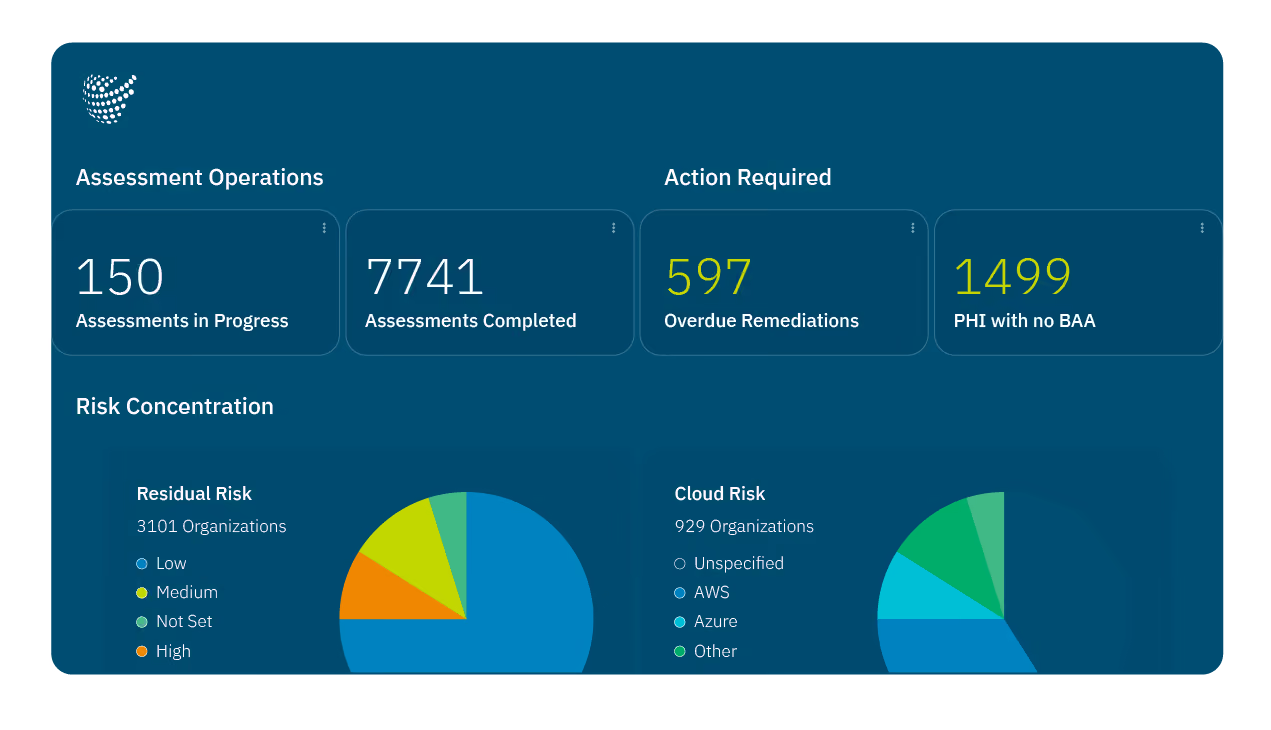
The Oversight Gap
Risk exists everywhere. Visibility does not. Without structured aggregation, enterprise oversight breaks down.

Siloed Oversight
Assessments occur across departments with no shared system of record.

Fragmented Findings
Risk data lives in separate tools and spreadsheets, not a unified view.

Accountability Gaps
Corrective actions are tracked manually, with no clear ownership or escalation.

Manual Consolidation
Leadership reporting requires hours of manual assembly from disconnected sources.

Outsourced Risk Functions
Distributed teams and external services firms create additional silos, not fewer.
From Fragmented Findings to Unified Governance
Censinet aggregates findings across compliance, operational, affiliate, and internal risk domains into a single governance framework, replacing the manual consolidation that typically slows leadership reporting.
With unified enterprise risk intelligence, leadership can:
With unified enterprise risk intelligence, leadership can:

Understand enterprise exposure in real time

Identify risk concentration across critical functions

Prioritize remediation across departments

Inform budget and resource allocation decisions

Support executive and audit reporting.
Governance That Drives Follow-Through
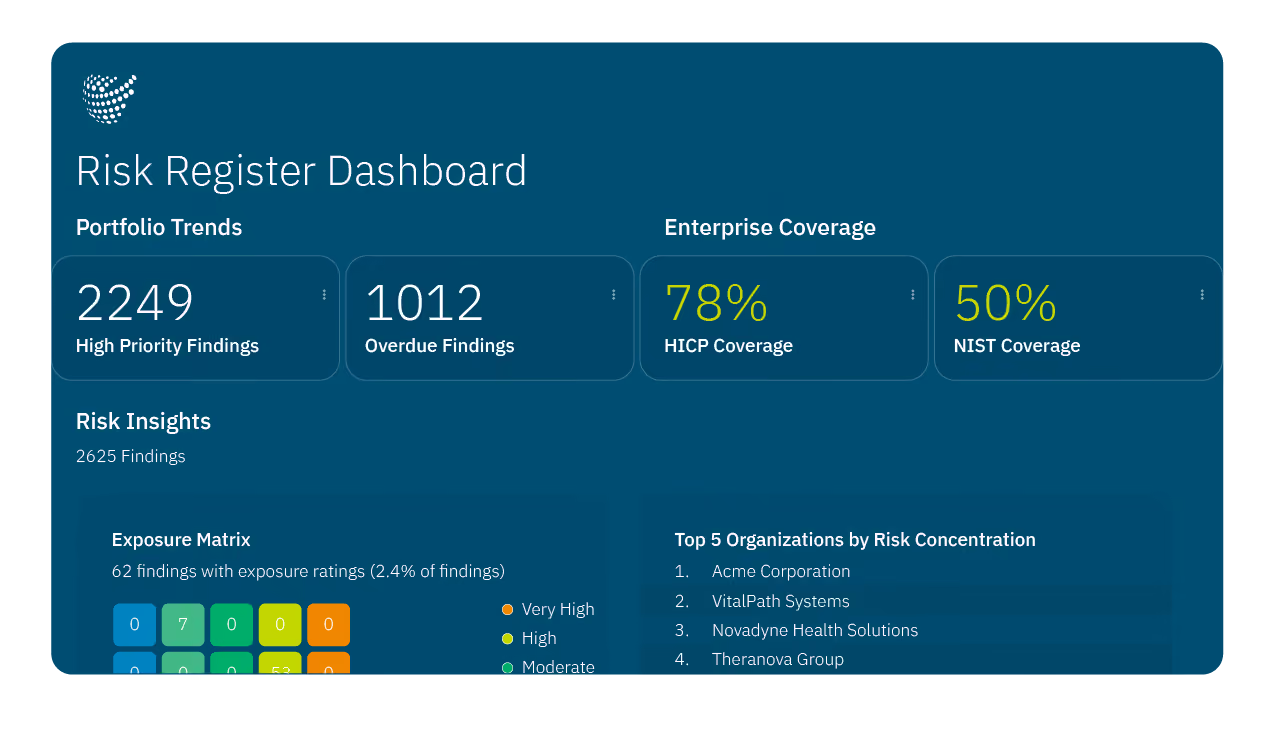
The Censinet Risk Register establishes a system of record for enterprise accountability.
All assessment and ad hoc findings consolidate into the Risk Register with defined ownership, status tracking, and longitudinal history.
Accountability is clear. Progress is measurable. Oversight becomes continuous and defensible.
All assessment and ad hoc findings consolidate into the Risk Register with defined ownership, status tracking, and longitudinal history.
Accountability is clear. Progress is measurable. Oversight becomes continuous and defensible.
Enterprise Risk Domains
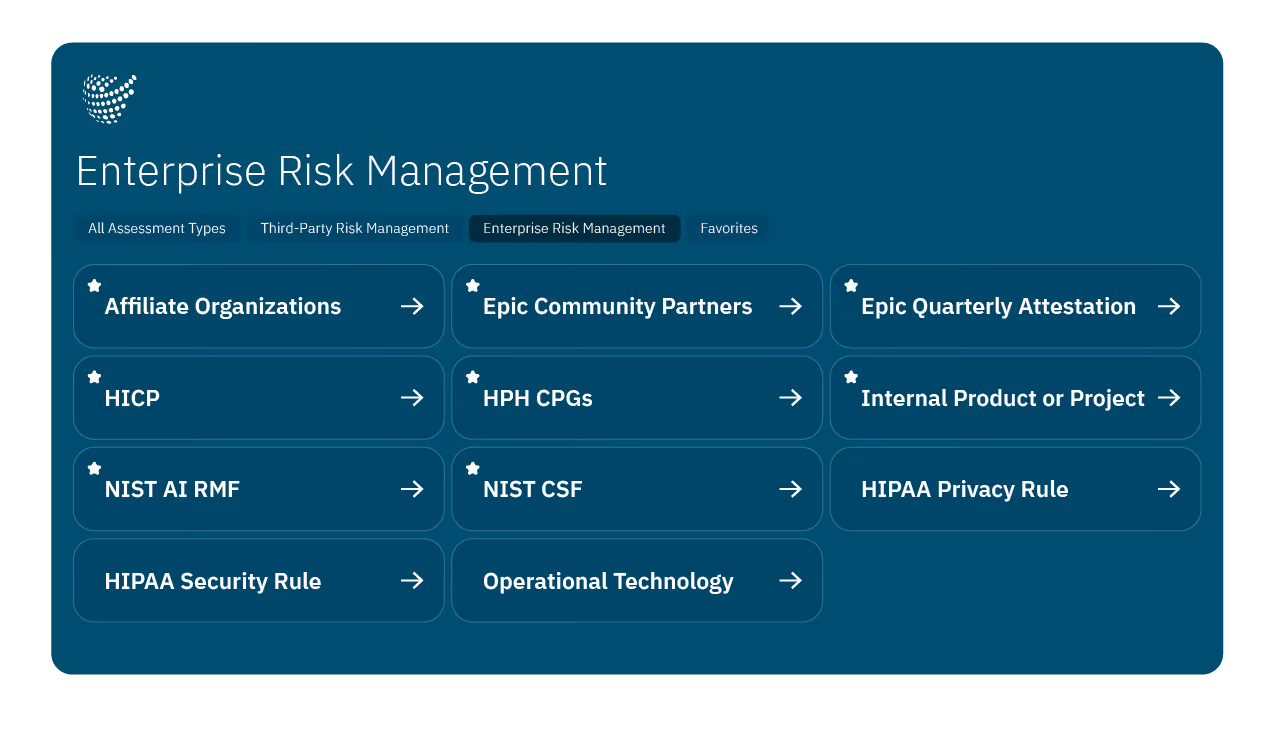
Censinet supports a broad range of enterprise risk assessments spanning organizational readiness and compliance, affiliate and community partner oversight, and operational and internal risk, all within a unified governance framework.
Each domain integrates into centralized oversight and corrective action workflows, preventing risk from remaining siloed within individual departments.
Each domain integrates into centralized oversight and corrective action workflows, preventing risk from remaining siloed within individual departments.
See How You Stand Against Your Peers
Understanding your enterprise risk posture means knowing where you stand relative to peers, not just where you stand internally.

Censinet benchmarking draws from one of the largest networks of healthcare risk data available, giving leadership context that no internal program can generate alone.

Compare your program maturity, assessment coverage, and risk findings against peer organizations to identify gaps, validate progress, and build a stronger case for investment.
