
Healthcare organizations aiming for CMMC certification often face seven common challenges that can derail their efforts. These include:
- Mis-Scoping the CUI Environment: Incorrectly defining the boundaries for Controlled Unclassified Information (CUI) leads to increased costs or audit failures.
- Incomplete Documentation: System Security Plan (SSP) gaps or inaccuracies can halt assessments entirely.
- Neglecting Asset Inventory: Missing or poorly managed assets, including medical devices, can result in compliance failures.
- Overlooking Third-Party Risks: Assuming vendors or MSPs ensure compliance without proper verification leaves vulnerabilities.
- Delaying Logging and Incident Response: Last-minute efforts to implement monitoring or incident response plans often fail to meet assessor expectations.
- Improper Use of POA&Ms: Treating Plans of Action and Milestones as a dumping ground for unresolved issues can disqualify certifications.
- Choosing the Wrong Assessment Path: Misunderstanding contract requirements or relying on unqualified assessors leads to costly mistakes.
These pitfalls can result in failed assessments, higher costs, and lost eligibility for Department of Defense contracts. Organizations must address these issues early, define clear responsibilities, and maintain accurate, verifiable documentation to succeed. Tools like Censinet RiskOps™ can help streamline compliance efforts and manage risks effectively.
Why Companies are Failing CMMC Assessments | Avoid These Common Pitfalls
sbb-itb-535baee
1. Mis-Scoping the CUI Environment
Scoping involves pinpointing all systems, users, or processes that handle Controlled Unclassified Information (CUI), as well as the tools used to secure it. Mistakes in scoping can lead to serious issues: overscoping unnecessarily broadens the compliance boundary, driving up costs and delaying progress, while underscoping leaves critical systems vulnerable and risks failing audits.
This is a recurring issue in healthcare. CUI isn’t confined to a single location - it can be scattered across email, SharePoint, endpoints, vendor portals, and backups. The problem gets worse with older medical devices and intricate electronic health record (EHR) integrations, which obscure the actual boundaries of where CUI resides. A common misstep is confusing electronic Protected Health Information (ePHI) with CUI. For example, ePHI under Department of Defense (DoD) contracts, like TRICARE, brings additional Cybersecurity Maturity Model Certification (CMMC) requirements on top of HIPAA regulations.
Another often-missed area involves Security Protection Assets (SPAs). Tools like Active Directory, Okta, VPNs, and ticketing systems may not handle CUI directly, but they play a critical role in protecting it and must be included in the scope of a CMMC assessment.
"If something is helping you meet the CMMC requirements in a domain, it's very likely that it is a security protection asset, even if it is not processing, storing, or transmitting CUI." - Koren Wise, CMMC Lead Assessor and CEO, Wise Technical Innovations [2]
To properly define your CUI boundaries, start by mapping your data flows. Document how CUI enters your organization, where it travels, and how it’s stored or deleted. From there, consider using an enclave strategy - a secure, dedicated environment for CUI. This approach can significantly reduce your compliance footprint and costs, but the enclave must accommodate essential workflows, like printing or transferring data from medical devices. Otherwise, staff might inadvertently move CUI to less secure areas, jeopardizing certification. Properly redefining CUI boundaries can simplify the environment by up to 40% [4].
For healthcare organizations, platforms like Censinet RiskOps™ can further simplify risk assessments and help ensure your CUI environment stays accurately scoped and aligned with CMMC requirements.
2. Incomplete Documentation and SSP Gaps
The System Security Plan (SSP) is the cornerstone of any CMMC assessment, and it's often where organizations stumble. Requirement CA.L2-3.12.4 is clear: if your SSP is flagged as "Not Met", the assessment halts immediately, and your Supplier Performance Risk System (SPRS) score defaults to "No Score" - there's no room for partial compliance or workarounds [6].
One of the most common red flags assessors encounter is the "aspirational SSP." This type of documentation outlines controls the organization intends to implement rather than what’s already in place. Phrases like "the organization will implement" or "plans are in place" almost always lead to a "Not Met" finding. Alarmingly, about one-third of organizations fail to proceed to Phase 2 of an assessment because their Phase 1 documentation review reveals critical gaps [5][2]. This disconnect between documented processes and actual practices frequently derails assessments.
"When the organization talks through their CUI flow, and that doesn't match how it's represented in the system security plan - that is the biggest signal when we go look at whether an organization's ready." - Mike Gallagher, Senior Director of Federal and Advisory Services, A-LIGN [2]
Another major issue is insufficient detail. Many organizations, particularly in healthcare, draft SSPs that address the 110 overarching NIST SP 800-171 requirements but fail to cover the 320 specific assessment objectives that CMMC Level 2 assessors evaluate [2]. Adding to the problem, relying on boilerplate or AI-generated templates can backfire. If your team can't confidently explain the controls outlined in the SSP, the document becomes a liability rather than an asset [2].
To avoid these pitfalls, start by mapping your Controlled Unclassified Information (CUI) data flows. Build your SSP around the systems and processes you actually have in place. Cross-check it against your Standard Operating Procedures (SOPs) and live technical configurations to ensure everything aligns [2]. Treat the SSP as a dynamic document - update it whenever there are changes to personnel, systems, or CUI handling procedures. Regularly gather evidence like logs, screenshots, and tickets, rather than scrambling to collect them right before an audit [3][5].
The risks of inaccurate documentation are serious. Misrepresenting compliance can lead to legal consequences, as seen in the $9 million Aerojet Rocketdyne settlement under the False Claims Act [5]. Keeping your documentation accurate and up to date is one of the most effective ways to navigate the CMMC certification process without hitting avoidable roadblocks.
3. Overlooking Asset Inventory and Configuration Control
If you don’t have a complete asset inventory, securing Controlled Unclassified Information (CUI) becomes nearly impossible. Many healthcare organizations approach a CMMC assessment without a full understanding of every asset that interacts with CUI. This can lead to scoping errors - either including too much or too little - which can jeopardize compliance efforts. Beyond simply defining scope, keeping configuration control up to date is just as important.
One area that often gets overlooked? Security Protection Assets (SPAs) - tools designed to protect CUI but don’t actually store or transmit it. Think of systems like Active Directory, VPNs, firewalls, vulnerability scanners, or ticketing systems that hold security logs. These assets fall under the scope of CMMC Level 2, yet IT teams frequently miss them when compiling their inventory.
Healthcare environments add another wrinkle. Medical devices, telemedicine platforms, laboratory systems, and IoT diagnostic tools all need to be assessed for their interaction with federal data. Leaving these out results in a System Security Plan (SSP) that doesn’t accurately reflect your environment, which can derail an assessment.
Another challenge is compliance decay - when systems drift from their hardened configurations over time. Since CMMC assessments are point-in-time evaluations, every asset must meet compliance standards at the exact moment assessors review them - not just when the project was initially completed [2]. To avoid falling behind, organizations should integrate patch management, change control, and vulnerability remediation into a single, ongoing process [1]. Use technical testing to validate configurations instead of relying solely on documentation reviews [5].
Here’s a quick breakdown of key asset categories and how they align with CMMC requirements:
| Asset Category | Healthcare Examples | CMMC Consideration |
|---|---|---|
| CUI Assets | EHR systems, medical imaging servers | Core focus of Level 2 controls |
| Security Protection Assets (SPAs) | Identity providers (Okta), VPNs, firewalls | Must be included in scope; often overlooked [2] |
| Specialized Assets | IoT medical devices, diagnostic equipment | Require specific hardening configurations [1] |
| Out-of-Scope Assets | Guest Wi-Fi, non-DoD billing systems | Must be segmented logically or physically [1] |
Using tools like Censinet RiskOps™ can help healthcare organizations maintain a current asset inventory and ensure continuous configuration control. This proactive approach reduces the risk of surprises during assessments and helps keep compliance intact.
4. Underestimating Third-Party and Supply Chain Risk
Healthcare organizations often focus on securing their internal systems but tend to overlook external service providers that have access to Controlled Unclassified Information (CUI) or Federal Contract Information (FCI). These third parties include cloud storage platforms, SaaS tools, managed service providers (MSPs), and subcontractors working on shared projects. Recognizing the risks tied to these external entities is a key step in strengthening your compliance strategy [3].
The challenge isn't just identifying vendors - it’s the mistaken belief that an MSP's general security measures automatically ensure compliance.
"Some organizations mistakenly think 'because they did it in their house, that means they're doing it in my house.' It doesn't mean that necessarily, and the assessor's there to see if they're really doing it in your house." - Koren Wise, CMMC Lead Assessor and CEO, Wise Technical Innovations [2]
MSPs often have significant access to systems handling CUI, yet they are frequently left out of compliance planning. Additionally, CUI can spread unnoticed through cloud syncing, collaboration tools, or shared project folders [8].
A common issue arises from unclear accountability - such as deciding who is responsible for creating an SSP entry or maintaining an incident log. This lack of clarity often results in control failures.
"If accountability is unclear or undocumented, the control defaults back to the organization and often fails." - MAD Security [9]
To address these risks, start by taking two critical steps: list every vendor with CUI access and obtain written proof of their NIST 800-171 or CMMC compliance posture - don’t rely on verbal assurances [8]. From there, establish a clear RACI matrix to define responsibilities across your organization, your MSP, and any compliance partners. The table below outlines how accountability can be distributed:
| Responsibility | MSP | Healthcare Organization | Compliance/Security Partner |
|---|---|---|---|
| Infrastructure Management | Primary (day-to-day ops) | Oversight | Informed |
| CUI Scope Definition | Supports context | Accountable | Primary guide |
| Evidence Collection | Provides artifacts in scope | Accountable for outcome | Captures/organizes logs |
| Incident Response | Executes changes | Approves business decisions | Primary coordinator |
| SSP/POA&M Maintenance | Contributes technical data | Accountable | Maintains/updates |
Tools like Censinet RiskOps™ can simplify this process. These platforms are designed to help healthcare organizations conduct effective third-party risk assessments, monitor vendor compliance, and manage supply chain vulnerabilities - all in one place. Since achieving C3PAO certification under the CMMC framework typically takes 12 to 18 months [8], collecting vendor documentation early is crucial.
Managing third-party risks is just as important as securing internal systems, completing documentation, and maintaining proper configuration control. Ignoring this aspect can leave significant gaps in your compliance efforts.
5. Waiting Too Long to Address Logging, Monitoring, and Incident Response
Delaying essential security processes can seriously weaken an otherwise compliant system. Many healthcare organizations make the mistake of treating logging and incident response as afterthoughts, checking them off only in the final stages. This approach often leads to failure. CMMC assessors aren’t just looking for controls that are technically in place - they want proof of consistent, long-term operation. And let’s be clear: you can’t fake that history at the last minute.
"It's not something you just put together a week before the assessment." - Mike Gallagher, Senior Director of Federal and Advisory Services, A-LIGN [2]
Incident response (IR) is another area where haste and lack of preparation can derail compliance efforts. A generic, untested IR plan - no matter how thoroughly documented - won’t cut it. Healthcare organizations need plans tailored to real-world scenarios, like ransomware attacks on electronic health record (EHR) systems, unusual activity in medical devices, or unexpected network outages that disrupt patient care. Running scenario-based tabletop exercises and documenting the outcomes through after-action reports is critical for demonstrating operational readiness.
Logging is another common stumbling block. Simply collecting raw logs isn’t enough. If the logs are unreadable or unorganized, they’re useless. Assessors expect logs to be centralized, synchronized, and regularly reviewed. They’ll want evidence that logs are actively analyzed for potential threats, not just stored away. In fact, about 33% of organizations assessed by Prescient Security fail to move past Phase 1 due to gaps in their logging and IR programs [2].
Sammy Chowdhury, Co-founder and Chief Compliance Officer at Prescient Security, explains this issue with a simple analogy:
"Phase 1 is a runway and Phase 2 is a takeoff. You don't want to build a plane in Phase 1. That's too late." [2]
The solution? Start early and build continuously. Set up centralized log management for all systems handling Controlled Unclassified Information (CUI). Conduct healthcare-specific tabletop exercises at least four times a year, and document everything - logs, tickets, screenshots, and after-action reports - on a monthly basis. This creates a solid evidence trail over time. Since achieving CMMC Level 2 readiness usually takes 6 to 12 months [3], any delay in addressing logging and incident response will waste valuable time.
6. Treating POA&Ms as a Catch-All
A Plan of Action and Milestones (POA&M) is designed to be more than just a static document - it’s supposed to function as a dynamic tool for identifying, tracking, and resolving compliance gaps. Unfortunately, many healthcare organizations misuse it as a dumping ground for unresolved issues. Instead of addressing these challenges head-on, they fill the POA&M with items that are expensive, technically complex, or politically sensitive. This approach results in a bloated document filled with outdated tasks and unrealistic deadlines, giving assessors the impression that the security program exists only on paper.
"The POA&M becomes a place to park issues that are politically difficult to fix, technically complex, or just expensive." - StealthTech365 [8]
Under CMMC 2.0, this misuse can have serious consequences. For example, six high-priority controls outlined in 32 CFR § 170.21(a)(3)(iii) cannot appear on a POA&M. If any of these controls are marked "Not Met", the certification attempt is immediately disqualified - no exceptions. Additionally, organizations granted Conditional Level 2 status are given a strict 180-day window to resolve every open POA&M item. Failure to do so results in the termination of their conditional status, requiring them to restart the entire process [5].
Another common issue is setting overly optimistic deadlines. For instance, assigning a 30-day remediation timeline to a task that realistically requires six months signals to assessors that the organization is relying on wishful thinking rather than actionable planning.
"A POA&M with 30-day remediation timelines for items that realistically take 6 months signals to assessors that the document is aspirational rather than operational." - NR Labs [5]
To avoid these pitfalls, organizations need a structured and realistic approach to managing their POA&Ms. Here’s how:
- Pre-assessment Scrub: Before the formal assessment, review all "Not Met" findings and ensure none of the six high-priority controls appear on the POA&M.
- Ownership and Budget: Assign clear ownership for each item, allocate the necessary resources through healthcare risk management solutions, and set achievable deadlines.
- Quarterly Reviews: Regularly review open items and document any interim mitigations for issues that can’t be resolved immediately.
- Plan Ahead: Aim to complete all remediation work at least 30 days before the 180-day deadline. This buffer allows time for evidence gathering and final preparations.
When managed effectively, a POA&M does more than just track compliance gaps - it becomes a critical tool that strengthens your entire CMMC certification process [5][8].
7. Choosing the Wrong Assessment Path
Healthcare providers need to select their CMMC assessment path based on the type of federal data they handle and the requirements of their specific DoD contracts. Here's the breakdown:
- Level 1: For organizations managing Federal Contract Information (FCI). This level requires an annual self-assessment and a leadership affirmation.
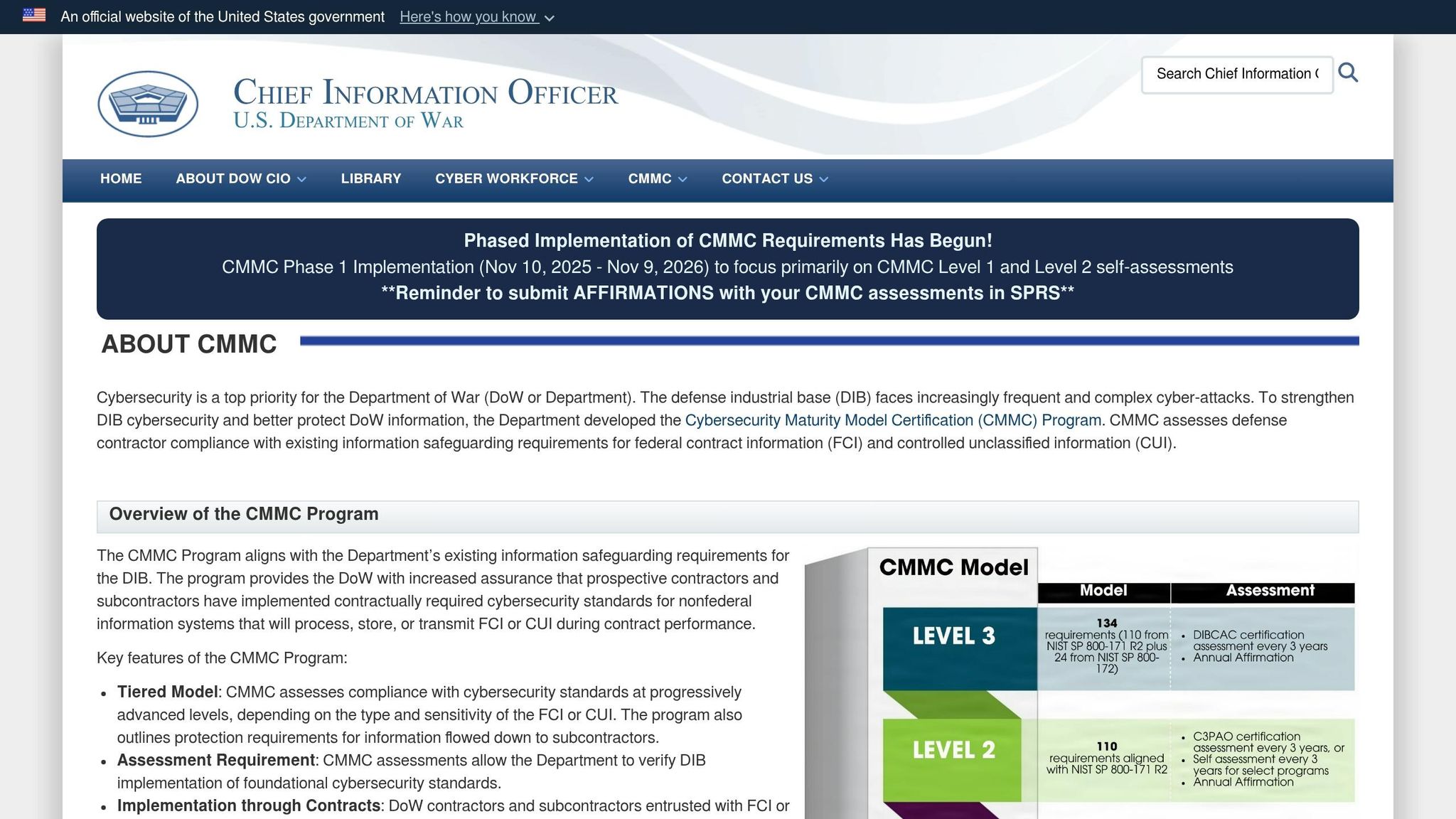
- Level 2: Applies to those working with Controlled Unclassified Information (CUI). It offers two options: a self-assessment for non-prioritized contracts or an independent audit by a Certified Third-Party Assessment Organization (C3PAO) for prioritized contracts.
- Level 3: Reserved for high-risk environments, requiring a government-led assessment [1][10].
Failing to understand these distinctions often leads to flawed compliance strategies.
One common mistake is assuming that compliance with frameworks like HIPAA or HITRUST automatically meets CMMC requirements. It doesn’t. While these frameworks align in some areas, CMMC has its own unique evidence standards and assessment protocols for handling federal data [1][10]. Another frequent error is believing that using a CMMC-certified MSP or cloud provider guarantees compliance.
"The MSP can't take ownership of that. The MSP can't sign off as an authorizing official for you." - Mike Gallagher, Senior Director of Federal and Advisory Services, A-LIGN [2]
In other words, MSPs can support compliance but cannot assume full responsibility or act as the authorizing official.
Choosing the wrong assessment path can have serious consequences. Over-scoping leads to unnecessary costs, while proper scoping can reduce complexity by up to 40% [4]. Under-scoping, on the other hand, can result in failed assessments, costly rework, and even "false claims" liability if CUI is processed outside the assessed boundary [2][4]. Alarmingly, around 33% of organizations fail to advance beyond Phase 1 of a formal assessment [2].
"Achieving CMMC Level 2 certification requires much more than checking 110 control boxes. It begins with building a clear understanding of where contract data flows throughout your organization." - Coalfire Federal [4]
To avoid these pitfalls, start by collaborating with your legal and contracting teams to determine whether your agreements involve FCI or CUI. Confirm the required assessment method with your DoD contracting officer [1]. Next, map out the flow of CUI within your organization - whether through email, SharePoint, or vendor portals - to establish an accurate assessment boundary. This step complements earlier scoping and documentation work. Finally, conduct a pre-assessment gap analysis against the 320 NIST SP 800-171 objectives before involving a C3PAO. This way, you can address critical gaps before a live audit [4][7].
Comparison Table

7 CMMC Certification Pitfalls for Healthcare: Impacts & Fixes
The table below highlights the major pitfalls, their impacts, and the corrective measures to address them. Each issue brings specific certification risks, but with targeted actions, these risks can be mitigated effectively.
| Pitfall | Impact | Primary Fix |
|---|---|---|
| 1. Mis-Scoping the CUI Environment | Overscoping increases costs unnecessarily, while underscoping leaves Controlled Unclassified Information (CUI) exposed, risking audit failure and potential loss of contract eligibility [3][2]. | Begin by mapping CUI data flows, then establish a strict enclave boundary that mirrors the actual movement of data [2][3]. |
| 2. Incomplete Documentation & SSP Gaps | The System Security Plan (SSP) is a critical gatekeeper - without a "Met" status, a Level 2 assessment cannot proceed. Missing documentation leads to controls being considered non-existent [5]. | Keep the SSP updated to meet all 320 NIST SP 800-171 objectives, ensuring it reflects real-world practices [2][5]. |
| 3. Overlooking Asset Inventory & Config Control | Unmanaged devices and cloud resources create vulnerabilities. Missing Security Protection Assets (SPAs), such as Active Directory or Okta, result in "Not Met" findings during Phase 1 [2]. | Automate asset discovery and enforce secure configuration baselines across all in-scope systems, including specialized equipment like medical devices [1][2]. |
| 4. Underestimating Third-Party & Supply Chain Risk | Assuming full control inheritance from a Managed Service Provider (MSP) can result in an inability to demonstrate your own controls during assessments [2]. | Use a RACI matrix to clearly define control ownership between your organization and the MSP, and verify the MSP's performance in your environment [2][3]. |
| 5. Waiting Too Long on Logging, Monitoring & IR | Lack of tabletop exercise history or unreadable audit logs leads to "Not Met" findings. Controls must be active and operational, not just documented [2]. | Conduct documented tabletop exercises annually, ensure logs are readable, and actively analyze them rather than just storing them [2][3]. |
| 6. Treating POA&Ms as a Catch-All | Including any of the six prohibited controls on a Plan of Action and Milestones (POA&M) results in immediate assessment termination. Missing the 180-day closeout deadline revokes Conditional Level 2 status [5]. | Confirm POA&M eligibility for all open items before submission and treat the 180-day deadline as non-negotiable [5]. |
| 7. Choosing the Wrong Assessment Path | Partnering with an unqualified assessor can overlook critical issues. A failed Certified Third-Party Assessment Organization (C3PAO) review wastes money and delays remediation, potentially jeopardizing contracts [5]. | Verify assessment requirements with your Department of Defense (DoD) contracting officer early, and vet all CMMC partners for CCP or CCA credentials [1][5]. |
It’s worth noting that remediation often takes 12–24 months, with about 33% of organizations stuck in Phase 1. This underscores the importance of addressing these pitfalls early [5][2].
"CMMC doesn't fail on intent. It fails on execution, ownership, and proof." - Jon Forisha, RADICL [3]
This quote perfectly encapsulates the recurring theme across the table: controls, documentation, and partner choices all hinge on consistent, verifiable evidence that assessors can rely on. Without this, even the best-laid plans can falter.
Conclusion
Achieving CMMC certification is not a one-time task - it’s an ongoing commitment that requires careful, early planning. Compliance isn’t just about checking boxes; it’s about creating a sustainable framework that evolves with your organization’s needs.
Kevin Henry of AccountableHQ highlights this well:
"CMMC for healthcare gives you a structured, evidence-driven path to protect federal information without losing sight of clinical realities." [1]
The challenges discussed - whether it’s misdefining CUI environments, overlooking SSP details, misusing POA&Ms, or selecting the wrong assessment path - emphasize the importance of taking proactive and structured steps. These pitfalls aren’t just warnings; they’re a guide to what needs attention right now.
Organizations that treat CMMC as a company-wide priority are better equipped to navigate these challenges. Success hinges on securing executive support, assigning clear responsibilities through a RACI matrix, and maintaining a continuous trail of evidence [3][4].
Additionally, leveraging the right tools can make a significant difference. For instance, Censinet RiskOps™ is tailored to healthcare settings, helping organizations centralize compliance efforts, automate third-party risk assessments, and maintain visibility across vendors, medical devices, and clinical systems. For healthcare organizations balancing CMMC and HIPAA requirements, this kind of integrated approach isn’t optional - it’s essential.
Starting early, defining clear boundaries, and implementing active controls are what set certified organizations apart from those that miss out on critical opportunities.
FAQs
How can we quickly determine if we have CUI or only FCI?
To determine if you handle Federal Contract Information (FCI) or Controlled Unclassified Information (CUI), work closely with your contracting, legal, and security teams to thoroughly review your agreements. CUI, in particular, demands enhanced protection under federal contracts and aligns with the stricter requirements of CMMC Level 2.
One practical step is to create a formal data flow diagram. This will help you map out the entire lifecycle of your data, making it easier to identify where and how FCI or CUI is stored, processed, or transmitted. This clarity is essential for meeting compliance standards.
What evidence do CMMC Level 2 assessors usually ask to see first?
When undergoing a CMMC Level 2 assessment, one of the first things assessors typically ask for is your System Security Plan (SSP). This document outlines critical details like your system boundaries, where data is stored, and how specific controls are implemented.
Beyond the SSP, assessors will expect a Plan of Action and Milestones (POA&M). This plan is essential for identifying security gaps and outlining how you intend to address them. Formal incident response policies are another key requirement - they demonstrate your preparedness to handle security incidents effectively.
Finally, assessors will look for operational evidence to verify that your policies are more than just words on paper. This includes items like system logs, change management tickets, and training records, all of which show that your security measures are actively in place and followed.
How can we prevent medical devices and vendors from increasing our CUI scope?
To keep your Controlled Unclassified Information (CUI) scope manageable, it's essential to clearly outline your assessment boundary and, when feasible, set up a dedicated enclave specifically for CUI. This approach helps contain and control sensitive information effectively.
Additionally, segment medical device networks and separate vendor-managed platforms from clinical or administrative systems. Using data flow maps can help you keep track of where CUI resides. Make sure your contracts with third parties include flow-down clauses to ensure accountability for handling CUI.
For simplifying risk management and benchmarking, both at the enterprise level and with third-party vendors, Censinet RiskOps offers a streamlined solution.
