
Most healthcare AI risk sits beyond the vendor on the contract. If a tool touches ePHI through a cloud host, model API, labeling firm, or embedded library, your team may need to review each party, not just the company selling the product.
Here’s the short version:
- One AI product can involve many outside parties
- Any party handling ePHI can trigger HIPAA duties
- A missing BAA can turn routine data use into a compliance problem
- Hidden dependencies can affect uptime, model output, and patient care
- The fix starts with an inventory, contract checks, and repeat reviews
- Tools like Censinet aim to keep that vendor chain visible over time
A few facts stand out. The article points to OCR guidance that cloud service providers can be business associates even if they only store encrypted ePHI. It also cites Censinet’s claim of up to a 66% reduction in time spent on key assessment work. That matters because AI supply chains change after purchase, and a one-time review often misses later hosting, model, or subprocessor changes.
If I had to reduce the article to one line, it would be this: if you don’t know every company behind a healthcare AI tool, you don’t know the full risk.
Navigating AI Vendor Risks: Essential Considerations for Healthcare Organizations
Where Hidden Third Parties Appear in Healthcare AI
Hidden third parties can show up at every layer of a healthcare AI product: model hosting, cloud infrastructure, APIs, and embedded software. For many health systems, the full supply chain behind those parts stays out of view. The issue isn't whether an AI tool has a single vendor. It's how many companies handle the data before a clinician gets a result.
Model Providers, Cloud Hosts, and External APIs
Clinical AI tools often depend on outside model providers, cloud hosts, and APIs. Each one adds another point where data may move beyond the vendor named in the contract.
Data Annotation Teams, Subcontractors, and Embedded Software Components
Some of the hardest-to-spot dependencies are buried inside tools healthcare teams already use. The same thing happens during development and integration: subcontractors may write the code, offshore teams may maintain it, and open-source libraries may sit inside the product.
AI dependencies can also be tucked into EHR NLP modules and remote-monitoring devices, where procurement teams may never see the vendor chain underneath.[1]
The April 2026 HSCC guide, the Health Industry Third Party AI Risk and Supply Chain Transparency Guide, gives teams ways to spot hidden dependencies and points where one failure can trigger another before integration.[1]
Once those dependencies are mapped, the next step is to assess what they expose, interrupt, or delay.
The Risks Hidden AI Third Parties Introduce
Hidden dependencies do two things at once: they expand the attack surface and increase the number of outside parties that may handle ePHI.
When patient data moves through a model provider, cloud host, or subprocessor outside the health system's control, it travels through systems the organization may never have checked. That can turn an ordinary AI workflow into an unreviewed ePHI disclosure. A hidden API or cloud processor might sit quietly in the background until someone maps the full stack and sees where the data went.
The hard part is simple to describe and tough to fix: these risks stay out of view until the organization traces every outside service that touches the product.
Cybersecurity and Privacy Risks to ePHI
Every external connection adds another opening for risk. If a hidden third party handles ePHI without a valid BAA, the disclosure is impermissible under HIPAA. [1]
Compliance and Clinical Operations Risk
Hidden dependencies can also trigger chain-reaction failures. If a sub-vendor fails, changes service terms, or disappears, the damage doesn't stay neatly contained.
In high-stakes workflows, a hidden cloud outage can interrupt a clinical tool and quickly turn into a patient safety problem. AI tools also rely on third-party security, governance, and model integrity practices that health systems can't fully check from the outside. And when a hidden component fails, ownership gets blurry fast. People spend more time figuring out who is responsible, and recovery often takes longer.
That makes the next move pretty clear: identify each dependency, review its controls, and keep watch over it over time.
sbb-itb-535baee
How to Identify, Assess, and Govern Hidden AI Dependencies

Healthcare AI Third-Party Risk: Identify, Assess & Govern Hidden Dependencies
AI supply chain risk isn't a one-time check. It's an inventory, contract, and monitoring job that keeps going. The goal is simple: map each dependency, then control it through procurement rules and steady oversight.
Build a Complete AI Inventory and Strengthen Due Diligence
Start with a full inventory of every AI-enabled tool in your environment. That sounds basic, but many healthcare organizations still don't have a clear view of the AI parts tucked inside third-party products. And those products often come from layered supply chains that include subcontractors, offshore development, and open-source assets.
Once you've pinned down where AI shows up, press vendors for details. Ask them to name any subcontractors, offshore development teams, and open-source assets tied to the product. Also request records on PHI collection, storage, access, and disclosure. HSCC's Health Industry Third Party AI Risk and Supply Chain Transparency Guide can help bring hidden dependencies into view and show where one weak link can set off another.[1] Match your due diligence process to the NIST AI Risk Management Framework and HICP so reviews follow the same playbook each time.[1]
Use that inventory as the basis for vendor review and contract terms.
Use Contracts, Security Reviews, and Monitoring to Control Risk
An inventory helps you find the risk. Contracts and monitoring help you keep it under control.
Any AI vendor that touches PHI needs a HIPAA-compliant BAA that spells out permitted uses, disclosures, and accountability.[1] Under HIPAA, a covered entity can be liable if it knew - or should have known through reasonable diligence - of a business associate's material breach.[1] That's why paperwork and follow-up matter. Keep security management records for at least 6 years.[1]
Vendor reviews also can't sit still. Reassess vendors on a set schedule and after major product, hosting, or subcontractor changes. That helps cut liability exposure and keeps your team aware of the dependencies running under each AI tool.
Managing AI Third-Party Risk with Censinet
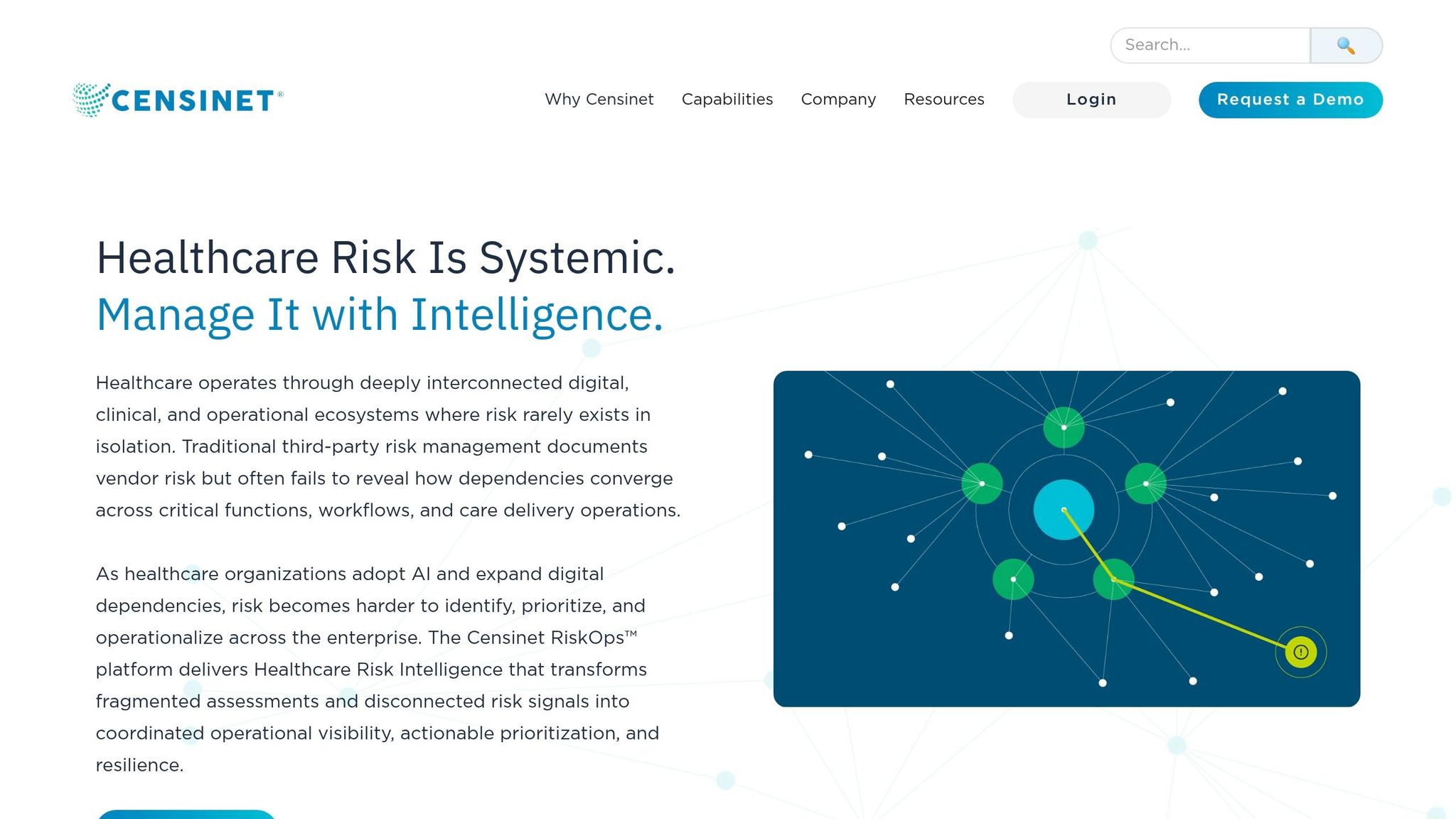
Hidden AI dependencies are easy to miss. And once a tool goes live, keeping that picture current gets even harder. That’s why a central system of record matters so much.
Using Censinet RiskOps to Centralize AI Vendor and Nth-Party Visibility
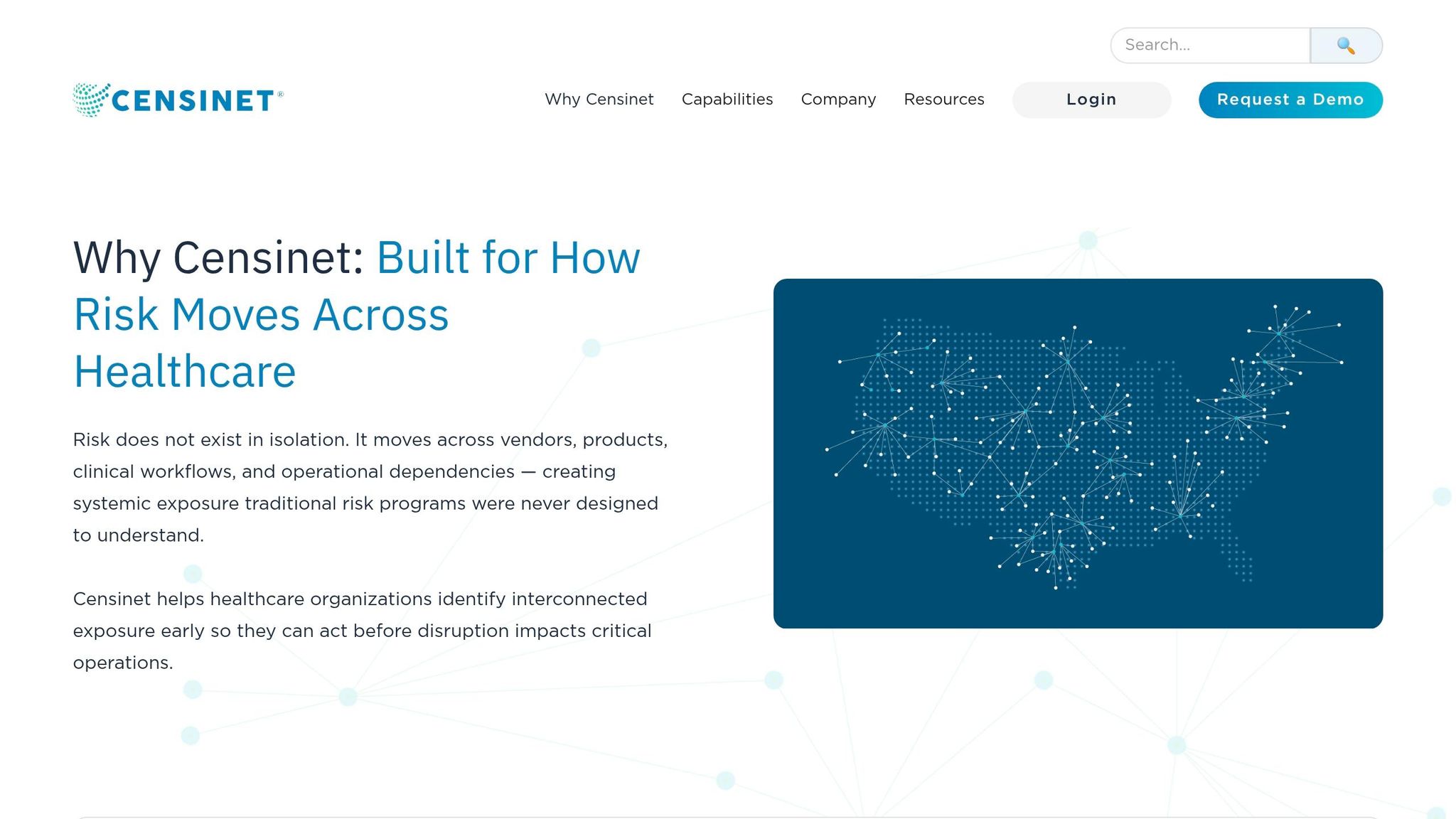
Once you’ve built the inventory, the next step is keeping it up to date. Censinet RiskOps keeps a live, central record of AI-enabled vendors and products across your environment. The focus is simple: track changes as vendors change. For each entry, it records whether the product uses AI, what data it touches, how it’s hosted, and which subprocessors sit underneath it. Censinet AI Telemetry marks products as AI-enabled, not AI-enabled, or unknown. That helps teams spot unreviewed AI tools, along with products that may have added AI after an earlier review.[2]
RiskOps also includes structured assessments that cover security, privacy, and clinical risk, aligned with major healthcare security and privacy frameworks. Risk, compliance, and clinical teams can sort the inventory by AI status, risk tier, and PHI exposure. From there, they can launch AI-specific assessments right from a product profile.[2]
That makes day-to-day oversight far more practical. Teams can answer questions like "Which AI tools rely on a single cloud provider?" or "Which vendors use generative AI to process our oncology data?" without digging through scattered files or stale spreadsheets.
Using Censinet AI and Censinet AITM to Speed Up Review and Oversight
RiskOps shows you the AI supply chain. Censinet AITM helps document and review it faster. It streamlines AI vendor review by automatically summarizing vendor evidence into structured profiles, recording data flow and integration details, and mapping downstream subprocessors such as cloud platforms, model hosting services, and data labeling teams that might otherwise stay out of view. It can also flag higher-risk dependencies, including cross-border data transfers or weak downstream controls. That gives risk committees a clearer exposure profile for each AI tool without forcing them to piece together evidence by hand.
Censinet AI adds human-reviewed automation to that workflow. It can analyze uploaded documents to find relevant controls and exceptions, draft early versions of AI use policies and contract clauses, and suggest which reviewers - security, privacy, clinical, and IT operations - should be brought in based on data sensitivity and integration scope.[3] Censinet says its Risk Assessor Agent delivers up to a 66% reduction in time spent on key assessment workflows.[4] Just as important, human approvers still make the final decision, so the process moves faster without taking expert judgment out of safety-sensitive choices.
The result is one workflow for inventory, risk, remediation, and monitoring. Instead of treating AI supply chain oversight like a one-time project review, teams can run it as an evidence-based program that stays current as vendors, tools, and downstream relationships shift.
FAQs
How can we uncover hidden AI subprocessors?
Move past static software checklists and ask for full visibility into the AI supply chain.
Each vendor should provide an AI Bill of Materials (AI-BOM) that spells out the upstream models, datasets, APIs, cloud hosts, and subcontractors involved. That gives you a clearer view of what sits behind the product instead of just what shows up in the sales deck.
You should also map PHI data lineage from end to end: where the data first enters, how it moves through the system, and where it’s stored. Then put contractual disclosure rules in place for subcontractors, and verify compliance through regular security audits and current documentation.
When does a hidden third party require a BAA?
A hidden third party comes into play any time an AI system receives, processes, or even touches PHI. In those cases, you need a Business Associate Agreement (BAA).
But here's the catch: a BAA by itself doesn't solve the problem. If AI is involved, the agreement should deal with AI-related risks head-on.
That means spelling out:
- limits on using PHI for model training or fine-tuning
- rules for sharing data with downstream subcontractors
- breach notification timelines
- HIPAA safeguards
- audit rights
Without those terms, a standard BAA can leave major gaps.
How often should healthcare AI vendors be reassessed?
Healthcare AI vendor assessments should be an ongoing lifecycle process, not a one-and-done checklist.
For high-risk AI vendors, reassess quarterly. For lower-risk vendors, do annual reviews.
You should also reassess after major model updates, performance drift, security incidents, or when models fail or show signs of bias. That way, governance can keep up as AI tools change, regulations shift, and upstream third-party risks move around too.
