
Managing patient consent across borders is a complex challenge, but blockchain offers a solution. Here's why:
- Current Issues: Patient data-sharing systems are fragmented, slow, and struggle with regulatory differences (e.g., HIPAA in the U.S. vs. GDPR in the EU). Revoking consent is especially problematic as it rarely propagates reliably across systems.
- Blockchain's Role: Blockchain ensures secure, tamper-proof consent records using a shared ledger. Features like smart contracts automate consent enforcement and revocation in real time. Sensitive health data stays off-chain for privacy.
- Real-World Use Cases: Telemedicine, clinical trials, and AI-driven research are examples where blockchain can simplify cross-border consent, ensuring compliance with varying regulations.
- Key Benefits: Patients gain granular control over their data, while healthcare providers benefit from automated, auditable, and consistent consent management.
Blockchain transforms consent management by addressing inefficiencies and ensuring compliance across jurisdictions, making it a practical solution for modern healthcare needs.
Cross-Border Consent Requirements and Use Cases
Regulatory Frameworks That Shape Consent Management
Managing cross-border patient consent is no easy feat. There's no universal standard; instead, healthcare organizations must navigate a maze of national and regional laws, each with its own consent rules.
For example, the EU's GDPR categorizes health data as "special category" information under Article 9. This means explicit consent or specific research exemptions are required to process such data. The penalties for non-compliance are steep - up to 4% of global annual revenue or €20 million [11]. Within the EU, countries like Germany demand explicit consent, while others, such as France and the UK, allow for exceptions under public interest or research purposes [8].
"The question is not just whether an activity is 'GDPR-compliant' in the abstract, but whether the chosen combination of consent strategy, lawful bases, and safeguards can sustain the ways you actually need to use your data over time and across borders." - Hinshaw & Culbertson LLP [8]
In the United States, HIPAA focuses on safeguarding PHI (Protected Health Information) and requires Business Associate Agreements (BAAs) for third-party data handling. However, it doesn't impose federal data localization rules [11]. Meanwhile, China's PIPL and Data Security Law classify health data as sensitive personal information, mandating a government security review for any cross-border transfers [9]. Similarly, India's DPDP Act treats health data as sensitive, with pending rules on transfers to non-approved jurisdictions. Violations under this framework could result in fines as high as $30 million per incident [11].
The financial risks of non-compliance are substantial. In July 2024, the Dutch National Security Agency fined YouBuy (Uber) €290 million for transferring sensitive data, including medical information, to U.S. headquarters without a valid legal mechanism [9]. France's CNIL also imposed a €1.5 million fine on DEDALUS BIOLOGIE in 2022 after sensitive data from 500,000 individuals was exposed without authorization [9].
The diversity of these laws makes cross-border data sharing incredibly complex, highlighting the need for flexible and reliable consent management systems.
Healthcare Scenarios That Require Cross-Border Consent
The challenges of cross-border consent management become even clearer when you consider real-world healthcare scenarios where data routinely moves across borders.
Telemedicine is a prime example. Imagine a telemedicine consultation between a U.S. provider and a patient in Singapore. This setup requires compliance with both HIPAA and Singapore's PDPA, each with its own consent and data handling rules [12]. Smart contracts offer a potential solution, allowing remote providers to access patient data for a specific consultation and automatically revoke access afterward [3].
Clinical trials face their own hurdles. Trials that span multiple countries require participant consent to remain valid across various legal systems, even as protocols evolve. Static consent forms often fall short in these situations. Instead, dynamic e-consent systems - where participants can adjust their preferences as the study progresses - are becoming increasingly essential [2][3].
AI-driven research adds another layer of complexity. Secondary use of data, such as imaging studies or genomic sequences, requires consent that can be tracked and verified across different research projects and institutions. The concept of "broad consent", where participants agree to unspecified future research at the time of enrollment, is gaining traction. However, it requires additional safeguards to ensure compliance with changing regulations [8][10].
"Biotech innovation now depends as much on what you can do with data as what you can do with molecules." - Hinshaw & Culbertson LLP [8]
In all these scenarios, consent must be specific, verifiable, and enforceable across jurisdictions with differing legal frameworks. Traditional centralized systems often fall short here. Blockchain technology offers a promising solution by enabling dynamic, auditable consent processes that can meet the demands of cross-border healthcare data sharing.
Blockchain Fundamentals Applied to Consent Management
Blockchain Basics for Healthcare Professionals
Blockchain operates as a shared, unchangeable ledger maintained across multiple nodes. This design eliminates single points of failure and removes the need for complicated trust agreements between institutions.
There are two main types of blockchains to consider: public blockchains, which allow open participation, and permissioned blockchains (like Hyperledger Fabric), which restrict access to approved members. The latter is particularly suited for meeting strict regulations like HIPAA and GDPR [3].
One of blockchain's standout features is its immutability, which ensures trustworthiness for consent records. Every consent action - whether a patient grants access, updates preferences, or revokes permission - is secured with cryptographic hashing, digital signatures, and timestamps. This creates a system where any attempt to alter an off-chain record is immediately flagged. If the hash of the tampered record doesn’t match the original on-chain reference, the discrepancy is detected, providing a tamper-evident audit trail for regulators and auditors.
"Blockchain technology... utilizes a decentralized ledger to maintain tamper-resistant transaction records... building an auditable and immutable medical record for patients, thereby encouraging trust, privacy, and accountability." - Sabri Barbaria et al., Healthcare Journal [1]
To protect sensitive PHI (Protected Health Information), blockchain systems store such data in encrypted off-chain solutions, like IPFS, while only recording de-identified pointers, metadata, and cryptographic hashes on-chain. This approach aligns with GDPR principles, such as data minimization and the "right to be forgotten", without compromising the integrity of consent records.
This technical setup provides a solid foundation for managing dynamic consent while ensuring compliance with regulations.
Using Smart Contracts to Automate Consent
Smart contracts offer a way to automate consent management by executing predefined actions on the blockchain when specific conditions are met. By translating legal frameworks like HIPAA and GDPR into code, they eliminate the need for manual intervention [3].
Here’s how it works: when a clinician or researcher requests access to patient data, the smart contract verifies the request against the patient’s stored consent preferences. These preferences might include factors like the purpose of use, user role, dataset category, jurisdiction, or time window. If the request aligns with the consent settings, the contract issues a short-lived access token. If not, access is denied, and the event is logged for compliance purposes [3].
This system is particularly effective for managing dynamic consent. For instance, in 2020, Maastricht University researchers used Ethereum-based smart contracts and the Data Use Ontology (DUO) to align patient consent with researcher requests. Testing this on the D1NAMO dataset, which included wearable sensor data from 29 patients, they demonstrated that the system could efficiently grant or deny access for categories like "Fundamental Biology" or "Drug Development" [4]. Similarly, the SCoDES project utilized Hyperledger Fabric to manage consent changes across clinical trial sites, ensuring updates were reflected instantly without relying on a central authority [2].
Smart contracts also excel in handling real-time revocations. If a patient withdraws consent, the contract immediately stops issuing new access tokens across all systems. This contrasts with traditional methods, where revocations can take days to propagate. Additionally, proxy patterns in smart contracts allow organizations to update consent policies without invalidating historical records [3].
These features create an automated framework for enforcing consent across borders and organizations.
Decentralized Identity and Access Control
Understanding who is requesting access is just as crucial as knowing what they want to access. Decentralized Identifiers (DIDs) are blockchain-based credentials that allow patients, providers, and organizations to verify their roles and permissions across networks without relying on a central authority [3].
For example, a physician in Texas and a specialist in Germany can both use the same DID framework for verification, even though they operate under different healthcare systems. Patients, in turn, can use secure digital wallets or portals to define detailed preferences - controlling who can access specific data, for what purpose, and for how long. This ensures that patients maintain full control over their data.
In more complex scenarios involving multiple organizations, Attribute-Based Access Control (ABAC) can integrate with blockchain-based identities. ABAC grants access based on verified attributes like role, specialty, institution, and jurisdiction, rather than relying on outdated username-password systems [1]. By mapping these identity systems to HL7 FHIR resources, it ensures that consent permissions are interpreted consistently across different EHR systems [3].
| Feature | Traditional Centralized Identity | Blockchain-Based Decentralized Identity |
|---|---|---|
| Control | Owned by a single institution or vendor | Owned and controlled by the individual |
| Trust Model | Requires bilateral trust agreements | Decentralized trust via cryptographic verification |
| Auditability | Fragmented, institution-specific logs | Immutable, single source of truth across the network |
| Revocation | Manual, slow, and often inconsistent | Real-time and automatically enforced via smart contracts |
| PHI Storage | PHI often stored with identity | PHI kept off-chain; only hashes/metadata on-chain |
These blockchain principles lay the groundwork for creating integrated, cross-border consent systems that prioritize transparency and patient control.
How to Design a Blockchain-Based Cross-Border Consent System
Building a Reference Architecture
Creating a blockchain-based consent system is key to enabling secure international sharing of patient data. Such a system relies on several interconnected components: a consent ledger, a policy engine, off-chain storage, and an identity layer.
The consent ledger serves as an append-only record, storing cryptographic hashes, timestamps, and metadata - but never raw Protected Health Information (PHI). Above this, the policy engine acts as the decision-making layer, converting legal frameworks like HIPAA and GDPR into executable rules. These rules evaluate access requests based on factors like role, purpose, and jurisdiction [13]. To protect sensitive data, PHI and consent documents are stored off-chain (e.g., in IPFS or encrypted databases), while only cryptographic hashes are recorded on-chain to ensure data integrity [1][3].
Instead of embedding hardcoded logic, policies should be implemented as data. This approach simplifies audits and allows the system to adapt to evolving regulations without requiring a complete overhaul [13].
To avoid costly redesigns in the future, data should be categorized early on. For example, classify information into identifiers, clinical observations, and sensitive categories like mental health or substance use. Each category can then be mapped to its specific legal requirements and disclosure restrictions [13].
Once the architecture is in place, the next step is to address privacy and compliance challenges.
Privacy Protection and Compliance
Blockchain's immutability might seem incompatible with regulations like GDPR's "right to erasure", but this can be managed by keeping PHI entirely off-chain. Only de-identified pointers and cryptographic hashes are stored on the ledger. If a patient exercises their right to erasure, the corresponding off-chain record is deleted, leaving behind the on-chain hash as a non-identifiable marker of the record's prior existence [1][3].
Pseudonymization adds another layer of security. By using a salted hash - which combines a patient's identifier with a random value - the on-chain reference becomes resistant to reverse engineering. At the same time, authorized systems can still link to the correct off-chain record [15].
For encryption, use symmetric methods for data exchange, protect keys with public-key pairs, and store them in hardware security modules (HSMs). Employing separate Certificate Authorities (CAs) for stakeholders like patients, hospitals, and researchers ensures a distributed trust model [1][3].
Two smart contract features are crucial for compliance:
- "Break-glass" emergency access: This allows temporary, limited access during emergencies, with mandatory justifications and enhanced auditing built into the contract [3].
- Proxy patterns for upgrades: These enable consent policies to evolve over time without affecting the validity of earlier consent records [3].
Once privacy measures are in place, the focus shifts to integrating the system into clinical workflows.
Integration with Clinical Workflows and Standards
For a consent system to gain widespread use, it must fit seamlessly into existing clinical workflows. One way to achieve this is by offering the consent service as a versioned RESTful API. This allows legacy Electronic Health Record (EHR) systems to request authorization without requiring a complete overhaul [3].
Ensuring interoperability is another critical step. Blockchain consent parameters should map directly to HL7 FHIR Consent resources. Using standardized FHIR purpose-of-use vocabularies ensures consistent interpretation of permissions, whether the request originates from a hospital in Chicago or a research facility elsewhere [1][3]. This alignment is especially important as TEFCA participants must support FHIR-based exchanges, including consent management for sensitive data, by July 2026 [14].
Security labeling is essential for compliance. FHIR resources should be tagged at the time of ingestion with sensitivity labels - such as MH for mental health or ETH for substance use disorder data. These labels enable the consent engine to filter data accurately. Without proper tagging, the system can't distinguish between a mental health condition and a routine diagnosis, which could lead to compliance issues or clinical risks [14].
"Consent enforcement only works if resources are tagged with security labels. Without labels, the consent engine cannot distinguish a mental health Condition from a diabetes Condition." - Jitendra Choudhary, CTO & Co-Founder, Nirmitee.io [14]
Finally, automate the entire consent lifecycle. For instance, notify patients 30 days before their consent expires to prevent unintentional lapses. Similarly, enable immediate, network-wide revocation: if a patient withdraws consent through their portal, the smart contract should instantly halt the issuance of new access tokens across all nodes [3][14].
sbb-itb-535baee
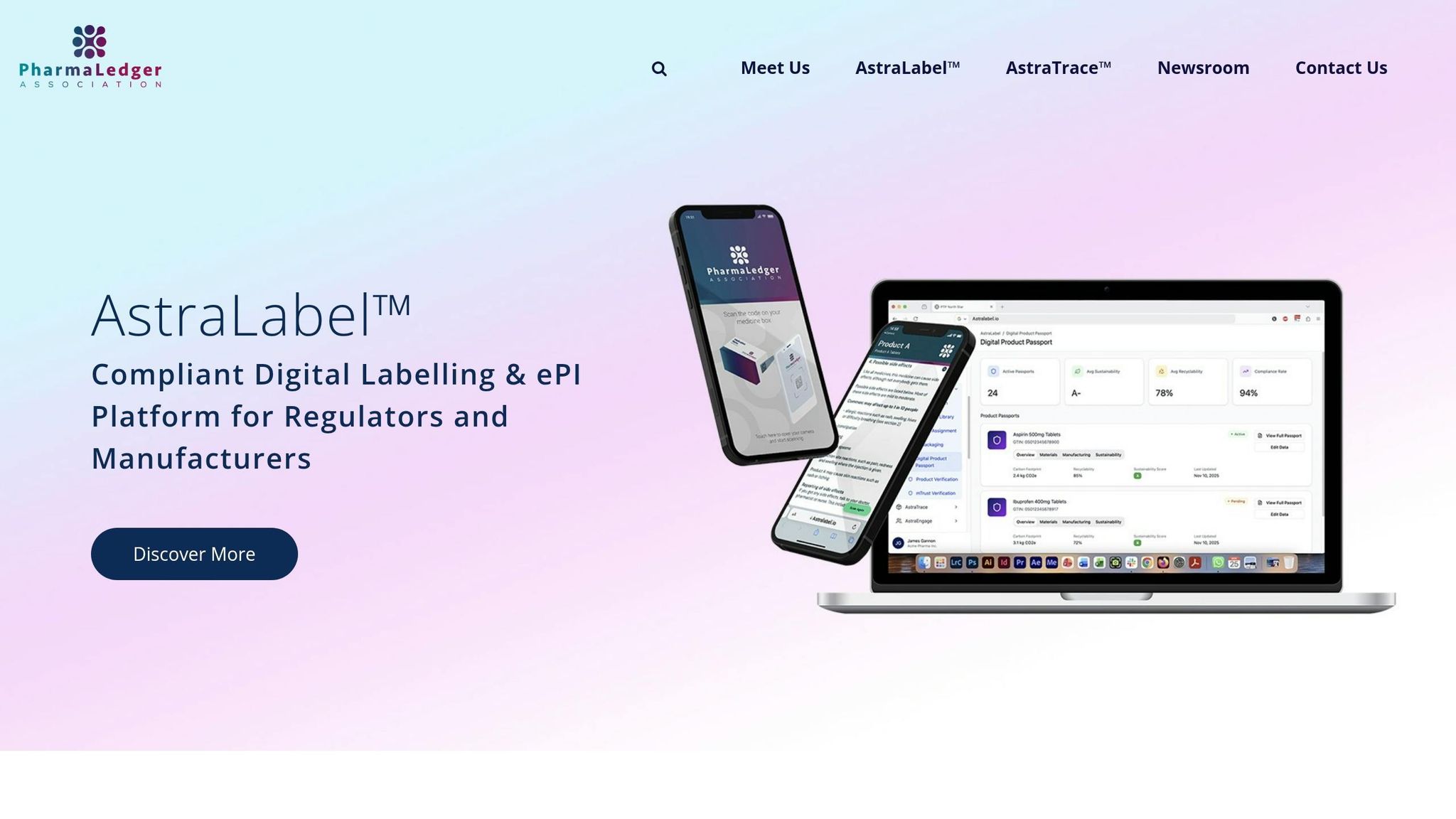
PharmaLedger's electronic Consent (eConsent) Use Case
Benefits, Challenges, and Governance of Blockchain Consent Systems

Blockchain vs. Traditional Consent Management: Key Differences
Blockchain consent systems, when paired with thoughtful design and integration, bring operational improvements and a solid governance framework to the table.
Advantages of Blockchain for Consent Management
Blockchain consent systems provide immediate operational improvements, starting with a tamper-proof audit trail. Every consent action - whether it's approval, denial, or revocation - is securely hashed, signed, and timestamped on an immutable ledger. This creates a reliable record that compliance teams can confidently present during regulatory audits [3].
A key shift with blockchain is the decentralization of control. Patients gain the ability to manage their consent directly through digital wallets or portals, specifying who can access their data, what data can be accessed, and for how long [3][6]. Smart contracts add another layer of functionality, automatically enforcing consent rules and removing the need for manual intervention [1][3].
"By combining Smart Contracts, Data Encryption, and an Immutable Ledger, blockchain turns consent into an enforceable, auditable, and portable policy." - Kevin Henry, Data Privacy Expert, AccountableHQ [3]
The table below highlights the differences between traditional and blockchain-based consent systems:
| Feature | Traditional Consent Management | Blockchain-Based Consent Management |
|---|---|---|
| Authority | Centralized (Hospital/HIE owned) | Decentralized (Consortium/Patient owned) |
| Auditability | Manual, periodic, and reactive | Real-time, immutable, and proactive |
| Revocation | Delayed; requires manual updates across sites | Immediate; propagated across the network |
| Patient Control | Passive (signing paper forms) | Active (granular self-management via portal) [6] |
| Trust Model | Bilateral legal agreements | Cryptographic consensus [1][7] |
These advantages pave the way for governance structures that balance risk management with regulatory compliance.
Challenges and How to Address Them
Implementing blockchain in consent management comes with its own set of challenges. A common issue is scalability. Healthcare systems generate high transaction volumes, which can strain blockchain networks. Solutions like permissioned ledgers (e.g., Hyperledger Fabric) and batching low-risk events can help manage latency [1][3].
Another concern is metadata leakage. Even when raw protected health information (PHI) is kept off-chain, the patterns in on-chain data - such as who accessed what, and when - can reveal sensitive details. Techniques like private channels, pseudonymous identifiers, and padding can reduce this risk [3][7]. Additionally, regulatory conflicts between frameworks like HIPAA and GDPR can be addressed by decoupling policy enforcement from data disclosure. Zero-knowledge proofs are particularly useful here, as they verify compliance without exposing underlying data [7].
| Challenge | Mitigation Strategy |
|---|---|
| Scalability/Latency | Use permissioned ledgers (e.g., Hyperledger Fabric) and batch low-risk events [1][3] |
| Key Management | Employ Hardware Security Modules (HSMs) and rotate keys regularly [3] |
| Regulatory Conflict | Implement zero-knowledge proofs and keep secret keys within the data owner's jurisdiction [7] |
| Metadata Privacy | Use pseudonymous identifiers and private channels [3][7] |
| Legacy Integration | Leverage containerization (e.g., Docker) and versioned RESTful APIs to minimize disruptions [1] |
Governance and Risk Management Framework
A strong governance framework is key to enabling seamless, cross-border data sharing. Beyond technical controls, governance ensures compliance and adaptability across jurisdictions. A consortium-based governance model works well here, involving authorized entities such as hospitals, research institutions, and patient advocates. This model defines who can join the network, how smart contract policies are updated, and who is held accountable in case of issues [3][1].
Smart contract governance is another critical element. By using proxy patterns, it’s possible to update policies as regulations evolve without invalidating historical consent records [3]. Governance committees should also establish clear protocols for emergency access scenarios, ensuring that every exception is logged, justified, and reviewed.
Risk management extends beyond the blockchain itself. Cross-border consent systems often interact with third-party vendors, cloud providers, and clinical applications, each adding its own risks. Platforms like Censinet RiskOps™ (https://censinet.com) help by streamlining third-party risk assessments, benchmarking cybersecurity, and managing risks collaboratively. This ensures organizations maintain visibility into all entities handling patient data and PHI, strengthening the system's overall security.
"The intrinsic trust-building aspect of blockchains overcomes the weaknesses of centralized systems, promoting data integrity and security through distributed consensus mechanisms." - Sabri Barbaria, Researcher [1]
Conclusion: Moving Cross-Border Consent Management Forward with Blockchain
Blockchain is no longer just a concept when it comes to cross-border consent management - it’s becoming a practical solution. From permissioned ledgers that ensure HIPAA and GDPR compliance in real-time to smart contracts that instantly handle consent revocations across all nodes, blockchain addresses critical system flaws. For instance, in Q1 2026, Kaiser Permanente faced a $47.5 million settlement after a patient’s opt-out for secondary data use was ignored when the record moved to a research aggregator. As Vereign aptly stated: “A consent preference that exists in one system cannot be read by another system that has already received the data. This is not a policy failure. It is an architecture failure” [16].
To make consent management a functional part of operations - not just a compliance checkbox - requires rethinking the system’s design. This involves separating the consent ledger, policy engine, and auditable processes into distinct layers. Only cryptographic hashes should be stored on-chain, while jurisdictional rules should be parameterized to adapt to local laws without altering the core system. Piloting small-scale use cases, such as cross-institution referrals or multi-site clinical trials, can help measure efficiency and audit performance [3]. These foundational steps naturally highlight the need for strong governance and ongoing risk management.
As regulations change, proxy patterns allow smart contracts to remain flexible and updatable without compromising historical data. Boundary risk assessments are crucial for identifying where consent preferences break down - typically at points where data crosses institutional borders [16]. Additionally, third-party vendors, cloud services, and clinical applications expand the potential attack surface. Tools like Censinet RiskOps™ (https://censinet.com) offer practical solutions for managing third-party risks and improving visibility across all entities handling patient data and PHI.
The way forward is clear: design systems for seamless propagation, prioritize auditability, and build governance frameworks that can adapt over time. As Julian Bradder, Founder & CEO of Inference Clinical, puts it, “Consent is operational infrastructure that governs what the real work is permitted to be” [5]. Organizations that embed these principles early - leveraging decentralized ledgers, smart contracts, and robust governance - will not only streamline cross-border data sharing but also build patient trust and stay ahead of evolving regulatory demands.
FAQs
How does blockchain instantly revoke consent across hospitals?
Blockchain technology makes it possible to revoke consent instantly through smart contracts on a shared, decentralized ledger. When a patient modifies their consent, the smart contract updates the unchangeable record in real time. This allows connected healthcare organizations to immediately verify the updated permissions, removing the need for manual updates and ensuring that access to sensitive health information is appropriately restricted. Censinet RiskOps plays a key role in managing risks within these data-sharing networks and clinical applications.
How is patient data kept private if consent is on a blockchain?
When it comes to protecting patient information, privacy is a top priority. Sensitive records are kept off-chain in encrypted systems that comply with HIPAA regulations. Meanwhile, the blockchain itself only stores de-identified metadata, transaction hashes, and links to the off-chain data. This approach ensures that patient details remain confidential while still providing proof of consent and maintaining data integrity.
Access to these records is tightly controlled through role-based or attribute-based permissions, meaning only authorized individuals can view Protected Health Information (PHI). This layered system keeps patient data secure at all times.
Who governs a cross-border consent blockchain network?
Governance within a cross-border consent blockchain network operates in a decentralized manner, meaning no single entity holds control. Instead, it’s a collaborative effort involving various stakeholders such as healthcare organizations, regulatory bodies, and patients. These participants - like hospitals and research institutions - often work together through consortiums, utilizing tools such as smart contracts to handle identity management, access permissions, and compliance requirements. At the heart of this system, patients maintain control over their own consent, reinforcing both their autonomy and trust in the process.
