
How to Ensure Telemedicine Privacy Compliance Globally
Post Summary
Telemedicine has transformed healthcare, but protecting patient privacy is a major challenge, especially when operating across borders. Here's what you need to know:
- Global Privacy Regulations: Laws like the GDPR (EU), HIPAA (US), and PIPEDA (Canada) require strict safeguards for health data. Key requirements include encryption, secure communication, and explicit consent for cross-border data transfers.
- Cross-Border Challenges: Countries like Bahrain and Japan have strict rules for transferring health data internationally, often requiring adequacy standards or detailed assessments like Transfer Impact Assessments (TIAs).
- Steps to Compliance: conduct vendor risk assessments, use secure platforms with signed agreements (e.g., BAAs for HIPAA), and implement strict access controls. Align with the most stringent regional laws to ensure compliance globally.
- Technology Solutions: Tools like Censinet RiskOps™ help automate vendor risk assessments, monitor compliance, and streamline processes, reducing manual effort while maintaining oversight.
- Staff Training: Proper training ensures teams understand and follow privacy regulations, safeguarding sensitive health data during telemedicine sessions.
In short, achieving privacy compliance in telemedicine requires understanding global laws, securing patient data, and leveraging technology to manage risks effectively.
Legal and Ethical Considerations in Telemedicine A Guide for Healthcare Providers
sbb-itb-535baee
Key Privacy Regulations for Telemedicine
Navigating privacy regulations is a must for ensuring compliance in the global telemedicine landscape.
HIPAA Requirements for US Telemedicine
In the United States, HIPAA governs all telehealth-related data, including video calls, messages, and billing records [2]. Following the expiration of the COVID-19 Public Health Emergency flexibility on May 11, 2023, and the end of the 90-day transition period on August 9, 2023, telemedicine providers must now meet full compliance standards without exceptions [4].
"HIPAA requires covered health care providers to use telehealth platforms that ensure secure communications and data storage." - Telehealth.HHS.gov [2]
Providers must implement strict access and audit controls to effectively manage third-party risk to ensure only authorized individuals can view patient information [2]. Additionally, before using any communication tools, vendors must sign a Business Associate Agreement (BAA) [3]. This applies to all technology vendors, including video conferencing platforms. The minimum necessary standard limits the use and sharing of patient data to what is strictly required for the intended purpose [2]. For substance use disorder (SUD) records, stricter rules under 42 CFR Part 2 mandate written patient consent [2].
GDPR Requirements for EU Telemedicine
In the European Union, the GDPR classifies telemedicine data as "health data", placing it under special categories that require extra protection [1]. Since the Schrems II ruling, providers relying on Standard Contractual Clauses (SCCs) for data transfers must conduct a Transfer Impact Assessment (TIA) to ensure equivalent protection measures are in place [1].
"Regarding cross-border transfers of telehealth data outside the European Union, the findings from the Schrems II judgment and the relevant standard contractual clauses need to be implemented." - DLA Piper [1]
Patients in the EU hold specific rights over their health data, such as ownership, portability, transparency, access, and erasure [1]. Some EU countries enforce stricter rules. For instance, France's CNIL prefers that health data remain stored within the EU and managed by EU-based entities [1]. If a destination country has a European Commission Adequacy Decision, additional transfer mechanisms aren't needed. Otherwise, providers must rely on SCCs or Binding Corporate Rules (BCRs) and assess whether supplemental measures - technical, organizational, or contractual - are required [1].
Other Regional Privacy Laws: PIPEDA and APAC Standards
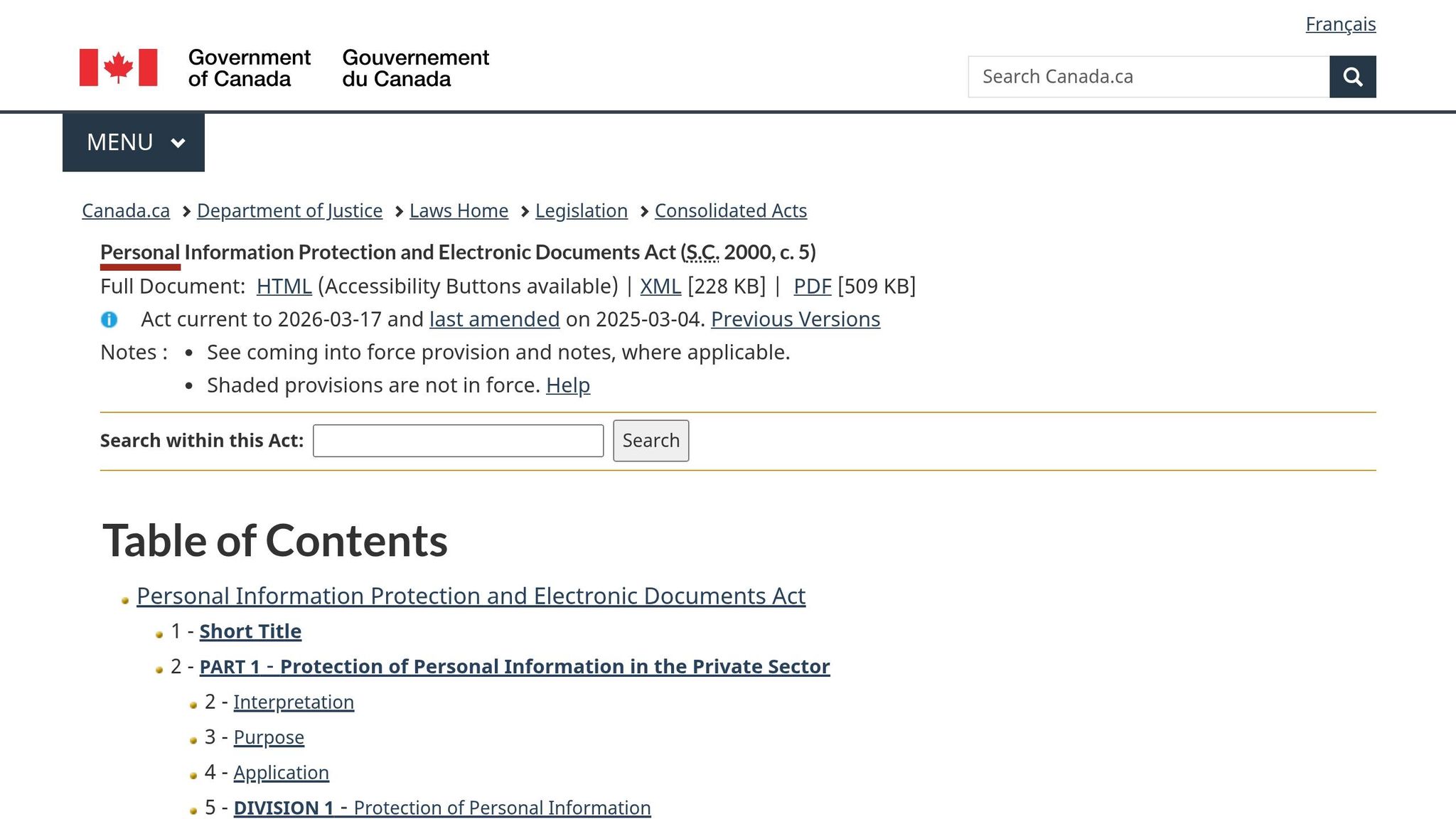
Outside the US and EU, other regions like Canada and Asia-Pacific countries have their own privacy frameworks shaping telemedicine practices.
Canada's PIPEDA allows data transfers to other jurisdictions for processing but requires organizations to safeguard data through contracts and assess risks to its integrity and confidentiality. Patients must be informed if their data may be accessible to foreign law enforcement.
In Australia, cross-border data transfers fall under Australian Privacy Principle (APP) 8. Providers must ensure recipients comply with APPs or verify that equivalent privacy laws are in place. If not, patient consent is required. Japan's APPI mandates patient consent for transferring telehealth data to foreign countries (with some exclusions like the EU) and requires informing patients about the destination country's data protection systems. Indonesia takes a more regulated approach, requiring providers to coordinate with the Ministry of Communication and Informatics before transferring data. This includes reporting the destination country, recipient details, and the purpose of the transfer.
Steps to Ensure Privacy Compliance

Global Telemedicine Privacy Requirements by Jurisdiction
Meeting global privacy standards requires a well-organized approach that combines technical safeguards with adherence to regulatory requirements.
Conduct Privacy Risk Assessments
Start by evaluating the adequacy of data protection in the destination country using recognized legal benchmarks, such as EU adequacy decisions or Bahrain's whitelist [1]. If the destination doesn’t meet these benchmarks, conduct a Transfer Impact Assessment (TIA).
A TIA involves several steps: outlining the data transfer details, analyzing the legal framework and vendor controls in the destination country, identifying additional safeguards, and documenting any remaining risks [8].
"Where risk remains high, consider data localization, additional pseudonymization, split processing, or pausing transfers until mitigations are feasible."
– Kevin Henry, HIPAA Specialist, Accountable [8]
Maintain a detailed inventory of data flows, including the origins, destinations, and purposes of processing. Use residency flags (e.g., EU/EEA or China) on patient records to automate routing and enforce policies [8]. These assessments are critical for setting up effective technical protections.
Use Encryption and Secure Communication Channels
Ensure the security of virtual consultations by implementing end-to-end encryption and requiring multi-factor authentication [5][6][7].
"Many providers assume that popular consumer video platforms are automatically HIPAA-compliant, but this is rarely the case without proper configuration and a signed BAA."
– Compliance Resource Center [6]
Limit access to sensitive data by enforcing least-privilege access controls and requiring the use of secure networks and devices [5][6][7]. Non-compliance with HIPAA can result in penalties exceeding $2 million per violation [6]. For personal devices, enforce policies that mandate encryption, remote wipe capabilities, and regular security updates [6]. Once communication security is established, focus on aligning data-sharing practices across regions.
Create Cross-Border Data Sharing Protocols
To address varying international privacy laws, develop standardized data-sharing protocols. Align your practices with the strictest requirements, creating a centralized governance model that incorporates GDPR-level transfer tools, HIPAA-grade security, and PIPL-style risk assessments [8].
| Jurisdiction | Primary Transfer Requirement | Key Exception/Note |
|---|---|---|
| European Union | SCCs, BCRs, or Adequacy Decision | Requires Transfer Impact Assessment (TIA) [8][1] |
| United States | Business Associate Agreements (BAAs) | HIPAA allows PHI transfers abroad if safeguards are met [8] |
| China (PIPL) | Security assessment, certification, or contract | Separate consent and impact assessments required [8] |
| Australia | APP 8 (Reasonable steps for compliance) | Must disclose recipient locations in Privacy Policy [1] |
| Canada | Contractual protection and risk assessment | Transparency about foreign access risks is needed [1] |
Update privacy policies to list recipient locations and describe cross-border transfer conditions [1]. In countries like Chile, Japan, and Argentina, secure explicit, prior, and written consent for cross-border transfers [1]. Strengthen contracts by including audit rights, subprocessor approval, and clear breach notification timelines [8]. For high-risk transfers, consider hybrid models where patient identifiers stay within the region, and only tokenized or pseudonymized data is shared for analysis [8].
Using Technology to Support Compliance
Keeping up with global privacy regulations manually is nearly impossible, especially as telemedicine continues to grow. That’s where technology platforms designed for healthcare risk management step in. These tools can handle repetitive tasks, maintain audit trails, and ensure privacy standards are consistently applied across different regions.
How Censinet RiskOps™ Manages Vendor and Enterprise Risks
Censinet RiskOps™ offers a centralized platform to tackle third-party and enterprise risks on an international scale. It simplifies the process of vendor risk assessments, which are crucial for technology providers like video conferencing platforms, cloud storage services, and medical device companies working under diverse regulatory frameworks.
One standout feature is its cybersecurity benchmarking, which allows organizations to evaluate their security posture against industry standards. This helps identify any weaknesses before they turn into compliance headaches. Automated workflows ensure that Business Associate Agreements (BAAs) are in place with all vendors handling protected health information (PHI) and that these vendors meet the security requirements outlined by regulations like HIPAA, GDPR, and others.
Censinet AI™ takes things further by automating vendor questionnaires, summarizing supporting evidence, and flagging risks posed by a vendor’s subcontractors (fourth-party risks). This automation is guided by human oversight, with configurable rules and review processes ensuring people stay in control of critical decisions. By cutting down the time needed for vendor compliance assessments, this system sets the stage for even more advanced AI-driven automation in the future.
Automating Risk Assessments with AI Tools
For telemedicine providers working across different jurisdictions, automated risk assessment tools have become a must-have. After the COVID-19 flexibilities ended on May 11, 2023, providers were given a 90-day window to align with HIPAA requirements [9].
AI-powered tools simplify compliance by validating vendor evidence, drafting policies tailored to regulatory standards, and routing key findings to the right stakeholders for review. These tools help providers meet international regulatory demands by ensuring privacy standards are applied consistently, no matter the location. However, the best systems maintain human oversight where it matters most. As Brandon M. Welch, MS, PhD, Founder and CEO of Doxy.me, explains:
"Privacy and security are essential to ethical telehealth practice. They should be respected and applied thoughtfully – not feared" [10].
Building a Privacy Compliance Culture
Technology can handle a lot of the heavy lifting when it comes to compliance, but it can't replace the human touch. Your staff plays a crucial role in protecting patient privacy. They’re the first line of defense, and they need to understand the importance of safeguarding sensitive health information, especially when it's shared across borders. With telemedicine becoming more common, more people than ever are handling patient data - and every single one of them needs proper training.
Training Staff on Privacy Regulations
While automation makes compliance easier, well-trained staff are essential for securing patient data. Regular, hands-on training is critical for everyone, from doctors to support teams, to understand key privacy laws like HIPAA, GDPR, and other regional regulations. Training should include practical steps like verifying patient identities through government-issued IDs or security questions at the start of every virtual visit [12][13], documenting explicit consent for telemedicine sessions, and ensuring the use of compliant platforms. With expired flexibilities, only approved tools can now be used [13]. Considering that 27.4% of medical specialists rely on telemedicine for at least half of their patient visits [14], knowing which platforms are secure is no longer optional.
Staff training should also emphasize patient education. Patients must be informed about best practices, such as using private spaces for consultations, securing their devices with strong passwords, and recognizing phishing attempts [12]. For cross-border cases, teams need to be aware of specific regional requirements. For instance, in Japan, patients must be informed about the personal information protection systems in the recipient country before their consent is obtained [1].
While automated tools help manage third-party risk, a well-trained team ensures every telemedicine session aligns with global privacy standards.
Documenting and Auditing Telemedicine Consultations
Training is only part of the solution - strong documentation and regular audits are just as important for fostering a privacy-compliant culture. Every cross-border data transfer should be documented to create an audit trail. This includes noting the purpose of the transfer, such as "medical diagnosis" or "contract performance", as these often qualify as legal exceptions to transfer restrictions [1].
Audits shouldn’t only happen when issues arise. They need to be routine. Technical safeguards must track all user activity within systems containing electronic Protected Health Information (ePHI) [11]. Organizations should also update risk assessments regularly to identify new threats to privacy and security [12]. For operations in the EU and EEA, this means conducting and documenting Transfer Impact Assessments (TIAs) to confirm the recipient country's legal system provides adequate protections [1]. Regular vendor audits further ensure that third-party processors uphold the technical and organizational measures outlined in their contracts [1].
| Region | Key Documentation Requirement |
|---|---|
| Australia | Document "reasonable steps" taken to ensure recipient compliance; Privacy Policy must list overseas locations [1] |
| European Union | Requires Standard Contractual Clauses (SCCs) and documented Transfer Impact Assessments (TIAs) [1] |
| Japan | Must notify patients of the specific personal information protection system in recipient's country before obtaining consent [1] |
| Brazil | Requires "highlighted" consent or proof of global corporate norms/certificates [1] |
| Mexico | Must issue privacy notice to recipient third party, who assumes same legal obligations as transferor [1] |
With 77% of patients reporting satisfaction with telehealth services and 63% planning to continue using them [11], telemedicine is clearly here to stay. By embedding privacy compliance into your organization’s culture, you can meet this growing demand while keeping patient data secure.
Conclusion
Summary of Privacy Compliance Strategies
Navigating privacy compliance in telemedicine is crucial for operating internationally. Health data, being highly sensitive, demands top-tier protection. Providers must address varying legal requirements by adopting a layered approach. This includes securing explicit patient consent for cross-border data transfers, relying on legal tools like Standard Contractual Clauses (SCCs) or Binding Corporate Rules (BCRs), and conducting Transfer Impact Assessments to ensure compliance with the Schrems II ruling [1].
Some regions simplify data transfers through white lists, which can be incorporated into a compliance strategy for smoother operations. Combining these legal measures with advanced technological tools creates a strong framework for safeguarding patient data across borders.
How Technology Supports Compliance Efforts
Technology plays a key role in simplifying the complexities of global privacy compliance. Managing these requirements manually is becoming increasingly challenging. Platforms like Censinet RiskOps™ offer solutions by centralizing risk assessments, vendor management, and compliance monitoring. These tools help healthcare providers evaluate third-party processors to confirm adherence to regulations like GDPR and PIPEDA.
With Censinet AI™, the assessment process is further streamlined. Vendors can complete security questionnaires while the system validates evidence, summarizes documentation, and flags potential risks from fourth-party relationships. This automation allows risk teams to maintain control through customizable rules and review processes, ensuring expert oversight while scaling operations. For telemedicine providers working in multiple jurisdictions, this means identifying compliance gaps faster and implementing safeguards more efficiently.
FAQs
Do I need patient consent for cross-border telehealth visits?
Yes, patient consent is generally a must when it comes to cross-border telehealth visits, especially if personal health information is being transferred internationally. Regulations like HIPAA in the United States and GDPR in the European Union require explicit consent to ensure privacy standards are upheld.
This step isn’t just about following the law - it’s also about safeguarding patient privacy during international data exchanges, making sure sensitive information is handled responsibly.
When should I do a Transfer Impact Assessment (TIA)?
When dealing with cross-border data transfers, conducting a Transfer Impact Assessment (TIA) is crucial. This process helps identify risks associated with foreign laws, government surveillance, and compliance requirements. In telemedicine, where sensitive health information is often shared internationally, a TIA becomes even more critical. It ensures adherence to legal frameworks like GDPR's Standard Contractual Clauses (SCCs) or Binding Corporate Rules (BCRs) while addressing potential privacy and security challenges in other jurisdictions.
How can I verify a telehealth vendor is HIPAA-compliant?
To ensure HIPAA compliance when choosing a telehealth vendor, keep these key points in mind:
- Make sure the vendor signs a Business Associate Agreement (BAA). This document clearly defines their role in protecting patient health information (PHI).
- Confirm they use robust security measures, such as encryption and strict access controls, to keep data secure.
- Check if they conduct or provide risk assessments to identify and address potential vulnerabilities in their data security practices.
- Look for transparency through certifications or documentation that demonstrate their compliance with HIPAA standards.
Following these steps can help ensure the vendor is committed to safeguarding patient information properly.

