
Psychological Impact of Cyber Incidents on Patients
Post Summary
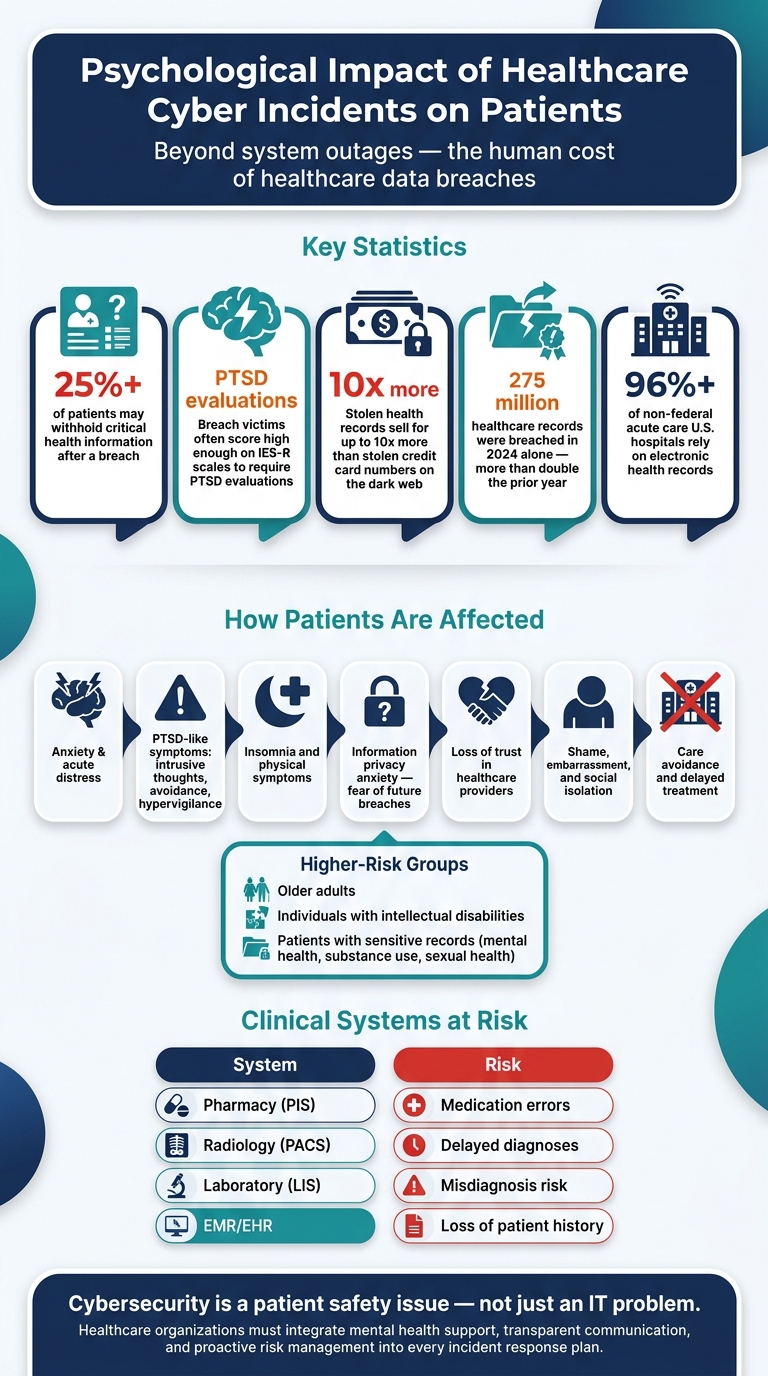
Healthcare cyber incidents don’t just disrupt systems - they deeply affect patients emotionally. When sensitive medical data is compromised, patients often experience anxiety, distress, and even symptoms similar to PTSD. Trust in healthcare providers erodes, leading many to withhold critical health information or avoid care altogether, which can jeopardize diagnoses and treatment.
Key points:
- Emotional Fallout: Anxiety, insomnia, and heightened alertness are common after breaches.
- Trust Issues: Over 25% of patients may withhold personal details post-breach, impacting care quality.
- Indirect Effects: Even those not directly affected can develop fear of future breaches.
- Care Delays: Patients may avoid or delay treatment due to privacy concerns.
- Staff Stress: System outages lead to workflow disruptions, adding stress for healthcare teams.
To address this, healthcare organizations must prioritize clear communication, offer mental health support during breaches, and enhance cybersecurity measures to protect patient data and trust.
Psychological Impact of Healthcare Cyber Incidents on Patients
How UMMC Cyberattack Impacts Patients

sbb-itb-535baee
Key Psychological Effects on Patients
Healthcare cyber incidents leave more than just technical damage - they can deeply affect patients on an emotional level. Studies reveal that when personal health information is compromised, the psychological toll can be immense. These effects not only disrupt mental well-being but also contribute to disruptions to clinical applications like avoiding care and losing trust in healthcare systems, which are discussed in later sections. Let’s explore how these psychological impacts manifest.
Anxiety and Acute Distress
The emotional aftermath of a healthcare data breach often resembles trauma responses seen in clinical settings. According to the Journal of Cybersecurity and Privacy, many victims experience symptoms akin to PTSD, such as intrusive thoughts, avoidance behaviors, and heightened alertness [3]. These reactions are often accompanied by physical issues like insomnia and headaches [1].
"Cybercrime leads to various negative psychological effects, such as anxiety, depression, stress, and physical symptoms." - Current Psychology [1]
Stress levels in affected patients, measured by IES-R scores, frequently reach thresholds that suggest a need for professional mental health support [3]. Beyond the initial shock, some individuals develop "information privacy anxiety" - a persistent fear of future breaches [3]. Certain groups, such as older adults and those with intellectual disabilities, are particularly vulnerable to these heightened effects [1].
Loss of Trust in Healthcare Providers
A data breach doesn’t just expose sensitive information - it erodes the trust patients place in their healthcare providers. This breach of confidence is especially damaging because of the deeply personal nature of medical data. When details about mental health, substance use, or sexual health are exposed, patients often feel shame, embarrassment, and social isolation [1].
Research from the University of Calgary highlights that breaches involving highly sensitive or financial data are strongly correlated with increased psychological stress [3].
"More invasive and consequential data breaches were associated with higher IES-R scores (greater data-breach-induced stress)." - Christopher R. Sears and Daniel R. Cunningham, University of Calgary [3]
Indirect Psychological Effects
Interestingly, even individuals not directly impacted by a breach can experience significant psychological stress. Media coverage of cyber incidents alone can create "data hacking anxiety" - a fear of becoming a future victim [3].
"Being a victim of a hacking incident significantly predicted anxiety about possible future hacking." - Christopher R. Sears and Daniel R. Cunningham, Department of Psychology, University of Calgary [3]
A 2016 study found that for the majority of data breach scenarios examined, anxiety levels among individuals who simply imagined a breach were much higher than their usual baseline [3]. The ripple effects of these breaches can also extend far beyond the individual. For instance, the 2015 Ashley Madison breach, which exposed private data of 32 million users, led to public shaming, extortion, broken relationships, and even suicides [3]. While not directly related to healthcare, this case underscores the devastating personal and social consequences that can follow the exposure of sensitive information.
How Cyber Incidents Affect Patient Safety and Care
The ripple effects of cyber incidents go well beyond technical disruptions - they impact patient trust, clinical workflows, and even long-term emotional well-being.
Care Avoidance and Delayed Treatment
When patients doubt a provider's ability to safeguard their data, they often choose to withhold critical health information - or worse, avoid care altogether. Studies show that over 25% of patients may omit key health details, leaving clinicians without the full picture they need to make accurate diagnoses [2]. For example, if a patient conceals a history of substance use, mental health struggles, or sexual health concerns, it can lead to misdiagnoses or unsuitable treatment plans. In some cases, this lack of trust results in delayed care, allowing manageable conditions to escalate into severe or life-threatening issues.
This erosion of trust doesn’t just strain the patient-provider relationship - it creates significant challenges for healthcare staff trying to deliver effective care, often exacerbated by third-party vendor risks.
Clinician Stress and Workflow Disruptions
Cyber incidents don’t just affect patients; they weigh heavily on clinical teams as well. When digital systems crash, hospitals often resort to manual, paper-based processes. While this workaround keeps operations moving, it’s far from ideal. Paper charting is slower, prone to errors, and adds extra stress for already overburdened staff.
"Cyber shock among employees might worsen burnout and affect clinical judgment. Critical decision-making and team communication may be hampered by this stress." - Dorosti et al., PLOS Digital Health [6]
Real-world examples highlight the severity of these disruptions. In May 2024, a ransomware attack on Ascension forced staff to revert to paper charting, jeopardizing patient safety [4]. Similarly, Manchester Memorial Hospital in Connecticut faced a cyberattack that left systems offline for over 40 days, leading to emergency patient diversions and the cancellation of nearly half of its elective procedures [4].
When critical systems like Electronic Health Records (EHRs), pharmacy platforms, or radiology systems go offline, the risks to patient safety escalate quickly. Errors in medication administration, delayed imaging results, and missed diagnostic data aren’t just possibilities - they’re likely outcomes.
| System Affected | Clinical Impact | Patient Safety Risk |
|---|---|---|
| Pharmacy (PIS) | Disruption in medication workflows | Increased risk of medication errors |
| Radiology (PACS) | Delays in imaging results | Slower diagnosis of urgent conditions |
| Laboratory (LIS) | Loss of diagnostic test data | Potential for misdiagnosis or delayed treatment |
| EMR / EHR | Loss of patient history | Increased risk of medical mistakes or redundant tests |
Long-Term Stigma and Emotional Harm
The consequences of cyber incidents don’t end once systems are restored. For patients whose sensitive medical information - like mental health records, HIV status, or substance use history - is exposed, the aftermath can be deeply personal and long-lasting. Fear of discrimination and social stigma can lead to emotional distress, isolation, and even reluctance to seek future care.
"The framework that was supposed to make clinical operations more efficient and improve patient outcomes can, if breached, compromise safety, disrupt continuity of care and erode trust." - José A. Cano, Ph.D., HealthManagement [2]
Adding to the gravity, stolen health records are highly sought after on the dark web, fetching prices up to 10 times higher than stolen credit card numbers [5]. This premium reflects the sensitive nature of medical data and the enduring emotional toll its misuse can inflict. For many patients, the fear of their information being exposed lingers far beyond the initial breach, altering how they engage with healthcare for years to come.
Reducing Psychological Risk Through Cybersecurity Practices
Cyber incidents in healthcare don't just disrupt operations - they have a direct impact on the mental well-being of both patients and staff. The silver lining? Healthcare organizations can take specific actions to minimize this harm, starting long before a breach occurs.
Clear Communication During Incidents
When a cyberattack strikes, staying silent can be the most damaging choice. Without timely and honest updates, patients may lose trust in the organization. This erosion of trust can lead to them withholding critical health information or even avoiding care altogether.
One effective approach is to formalize responses to cyber incidents by implementing a "Code Cyber" protocol. This ensures an immediate shift to manual procedures during system outages [6]. Additionally, having offline communication channels ready can help maintain team coordination when digital systems go down [6].
"Cybersecurity should be regarded not simply as an IT responsibility but as a vital enabler of safe, trustworthy clinical decision-making." - HealthManagement.org [7]
When communicating about breaches, speed is important, but so is tone. Patients need to feel that their concerns are understood, not just hear technical jargon. Acknowledging the emotional impact of the situation can make a significant difference.
"Patients may fear stigma, financial harm, or exposure of sensitive information. Organizations must acknowledge this in their tone when addressing the breach." - Tshedimoso Makhene, HIPAA Times [9]
Clear communication is just the first step. Adding mental health support to the response plan can further ease the distress caused by cyber incidents.
Adding Mental Health Support to Incident Response
Most incident response plans focus on restoring systems but overlook the emotional toll on patients and staff. Including mental health resources in these plans is a simple yet powerful way to address this gap [6].
For patients, this could mean offering dedicated hotlines, access to case managers, or identity theft restoration services after a breach. For staff, it’s about recognizing "cyber shock" as a genuine occupational hazard. Providing counseling resources during and after incidents can help frontline workers - like nurses and clinicians - manage the added stress of system outages. This is especially critical as their judgment and decision-making are often most needed during these times [6].
Organizations that act quickly to provide support and guidance can significantly reduce the psychological strain of a breach [9]. Combined with proactive risk management, these measures bolster overall resilience.
Using Risk Management Platforms to Reduce Harm
Prevention is always the best strategy. By actively managing risks, healthcare organizations can avoid breaches altogether, safeguarding both patient trust and mental well-being. The numbers are staggering: in 2024 alone, 275 million healthcare records were breached, more than doubling the previous year's figures [10]. With over 96% of non-federal acute care hospitals in the U.S. relying on electronic health records [7][8], the stakes have never been higher.
Viewing cybersecurity as a core clinical responsibility, rather than just an IT task, positions organizations to better protect both data and people. Tools like Censinet RiskOps™ play a key role here. This platform helps healthcare organizations continuously assess and manage risks across vendors, medical devices, clinical applications, and supply chains. By using AI-powered risk assessments and real-time monitoring, teams can identify vulnerabilities early, minimizing disruptions and reducing psychological harm.
"Cybersecurity is no longer a function managed in the IT department's back office. It's a front-line brand issue, with real implications for patient satisfaction and loyalty." - Matthew Briggs and Ariel Novak, MedCity Influencers [11]
| Communication Strategy | Action | Benefit |
|---|---|---|
| Emergency Coding | Use "Code Cyber" for outages | Ensures a smooth switch to manual care; reduces panic [6] |
| Offline Infrastructure | Prepare non-digital communication channels | Keeps teams coordinated; avoids treatment delays [6] |
| Mental Health Support | Provide counseling for patients and staff | Reduces "cyber shock"; prevents staff burnout [6] |
| Transparent Disclosure | Deliver empathetic, timely breach notifications | Maintains trust; discourages withholding information [7] |
| Proactive Risk Management | Conduct ongoing risk assessments | Lowers breach risks; protects patient well-being |
Conclusion: Building Cybersecurity Around Patient Safety
Cyber incidents go far beyond being just technical problems. As the research highlights, they carry a deep psychological toll - causing anxiety, breaking down trust, and even leading patients to delay or avoid seeking care. For vulnerable groups, like older adults or individuals with intellectual disabilities, the emotional impact can be even more profound [1].
The consequences aren't limited to financial losses. According to IES-R research, victims of data breaches often need PTSD evaluations [3]. These are not abstract concerns - they represent real, measurable harm to patients. Addressing these harms requires a major shift in how cybersecurity is approached.
Healthcare organizations must aim higher than simply meeting compliance standards. John Riggi, Senior Advisor for Cybersecurity and Risk at the American Hospital Association, emphasizes this point:
"The most important defense is to instill a culture of cybersecurity focused on patient safety." [5]
This cultural shift is critical for rebuilding the trust that’s been explored throughout this discussion. It’s about merging digital security with patient safety as a core clinical priority. Tools like Censinet RiskOps™, which help identify and mitigate risks, enable organizations to go beyond compliance - protecting both sensitive data and the people who depend on it.
FAQs
What should I do if my health data is exposed in a breach?
If your health data is compromised in a breach, it’s crucial to tackle both the security risks and the emotional toll it may take. Here's how you can respond effectively:
- Keep an eye on your data: Regularly check for unusual activity in your accounts. Notify your healthcare provider immediately if you spot anything suspicious.
- Strengthen your security: Update passwords, use strong and unique combinations, and enable two-factor authentication to add an extra layer of protection.
- Address emotional well-being: Feeling anxious or stressed is a natural response to such incidents. Consulting a mental health professional can provide valuable support in managing these feelings.
Taking these steps can help you regain control and protect yourself moving forward.
Can a cyber incident affect my care even if my record wasn’t stolen?
Yes, a cyber incident can still disrupt your healthcare experience by interfering with clinical processes and putting patient safety at risk. Even if your personal records are not compromised, such events can undermine the trust, safety, and quality of the care you receive.
How can hospitals reduce patient anxiety during and after an attack?
Hospitals can ease patient anxiety during and after a cyberattack by focusing on clear and transparent communication. Patients need to understand what happened, how it affects their care, and what steps are being taken to safeguard their data and ensure their safety. Addressing these concerns openly can go a long way in maintaining trust.
Equally important is prioritizing rapid recovery and continuity of care. Minimizing disruptions reassures patients that their well-being remains the top priority, even in challenging situations.
Incorporating cybersecurity into patient safety frameworks is another key step. By taking proactive measures and using solutions like Censinet, hospitals can demonstrate their commitment to protecting patients and reducing concerns about potential future cyber threats.
Related Blog Posts
- One in Three Hospitals Confirm Cyber Incidents Directly Impacted Patient Care in Benchmark Findings
- From breach to bedside: cyber risk is now a patient safety crisis.
- Cybersecurity Benchmark Study Links Cyber Incidents to Direct Patient Safety Concerns
- Benchmarking Study Finds Cyber Risk Governance Emerging as Board-Level Priority

