
AI Cyber Risk: When Your Smart Defense Becomes the Attack Vector
Post Summary
Attackers target AI models, pipelines, and APIs to manipulate outputs, disable defenses, and access sensitive patient data.
It’s when attackers corrupt training data to distort model behavior, leading to misdiagnoses, treatment errors, or hidden vulnerabilities.
Tiny, invisible input changes can cause diagnostic models to output incorrect results, threatening patient safety.
APIs and configuration settings can be manipulated, altering model logic in ways traditional security tools struggle to detect.
Protecting training pipelines, securing models and infrastructure, enforcing human oversight, and adopting strong governance practices.
By centralizing AI risk tracking, automating assessments, supporting governance workflows, and aligning with HIPAA and NIST frameworks.
AI is transforming healthcare cybersecurity by detecting threats, automating responses, and monitoring systems. But when attackers target these AI tools, they can exploit vulnerabilities, turning defenses into attack vectors. This creates risks like compromised patient safety, data breaches, and manipulated medical decisions.
Key points:
Addressing these risks requires robust security measures, continuous monitoring, and governance frameworks to protect patients and healthcare systems.

AI Cyber
: Key Statistics and Attack Vectors
Understanding the AI Attack Surface in Healthcare
AI's integration into healthcare has brought incredible advancements, but it also widens the scope for potential cyberattacks. Let’s take a closer look at how this happens.
How AI Fits Into Healthcare Security Systems
AI plays a critical role in healthcare's security infrastructure. It monitors electronic health records to detect unauthorized access, scans Internet of Medical Things (IoMT) devices for unusual activity, and powers cloud-based Security Operations Centers that analyze threats in real time. These systems often have privileged access to sensitive networks, medical devices, and patient data, which significantly increases the attack surface. With such deep integration, AI systems naturally become attractive targets for cybercriminals.
Why Attackers Target AI Security Tools
Healthcare data is incredibly valuable, fetching 10 to 50 times more than credit card information on dark web marketplaces[1]. The stakes are high - any system failure could directly impact patient safety. This urgency is why healthcare organizations are 2.3 times more likely to pay ransoms than businesses in other industries[1]. By compromising the AI tools that protect this data, attackers gain not only access to sensitive information but also control over critical patient-care operations, giving them enormous leverage.
The Problem: AI Defenders That Create New Risks
When AI security tools are compromised, they don’t just stop working - they can actively weaken existing defenses. The attack surface now includes AI training pipelines, machine learning models, and AI-powered medical devices. Attackers exploit AI’s dependence on clean, trustworthy data and its often opaque decision-making processes. For example, an AI system designed to detect threats could be manipulated to ignore real attacks or falsely flag legitimate activity, creating confusion and masking actual breaches. These vulnerabilities turn AI from a defender into a liability when it falls under attacker control. Understanding these risks is a crucial first step in developing effective countermeasures.
Major AI Cyber Risks in Healthcare
The growing integration of AI in healthcare has expanded the attack surface, exposing systems to advanced threats that can compromise their defenses. Here’s a closer look at three key risks that specifically target AI-driven healthcare systems by exploiting the very mechanisms that make them effective.
Data Poisoning and Training Pipeline Attacks
AI systems rely heavily on the quality and integrity of their training data. In a data poisoning attack, hackers intentionally corrupt this data, introducing subtle biases that can derail the model’s performance. For instance, an attacker might manipulate training data to cause an AI diagnostic tool to overlook certain medical conditions or recommend inappropriate treatments. What makes these attacks particularly dangerous is their stealthy nature - they can remain hidden until the compromised system is deployed. Imagine a diagnostic tool that works perfectly under normal circumstances but fails catastrophically when it encounters a specific, manipulated input.
Adversarial Examples and Evasion Tactics
Adversarial attacks take advantage of how AI systems interpret inputs. By making incredibly small, calculated changes - sometimes altering just 0.001% of input data - attackers can trick the system into making incorrect decisions. For healthcare, this could mean diagnostic tools providing false positives or negatives, potentially leading to life-threatening outcomes. These attacks highlight how even the slightest vulnerabilities in AI systems can undermine their reliability in critical applications.
Model Manipulation and API Exploitation
Once an AI model is operational, its APIs and configuration settings become potential entry points for attackers. By gaining access, they can alter key parameters, effectively changing how the model behaves. Unlike traditional software vulnerabilities, these exploits target the decision-making logic of the AI itself, making them harder to detect with conventional security tools. Dynamic AI models, which continuously evolve, present even more opportunities for exploitation. These risks underscore the importance of securing every layer of AI management, from development to deployment, to protect against such sophisticated threats.
How to Reduce AI Cyber Risks in Healthcare
Securing AI systems in healthcare isn’t as straightforward as applying traditional cybersecurity measures. AI models are dynamic and heavily reliant on vast amounts of training data, which introduces unique vulnerabilities. To address these challenges, healthcare organizations need to focus on three critical areas: data integrity, model security, and human governance.
Protecting Data Integrity and AI Pipelines
The foundation of secure AI lies in safeguarding the training data. Healthcare organizations should implement data provenance controls to track where training data comes from, who accesses it, and any changes made throughout its lifecycle. This means enforcing strict access permissions and deploying validation frameworks to ensure data quality before it enters the AI pipeline. Clear governance processes are also essential, with well-defined roles for clinical oversight at every stage [1].
AI training data often flows through multiple systems, such as electronic health records and imaging databases. Each handoff increases the risk of data corruption. To counter this, organizations can use automated validation checks at every stage to catch anomalies early - before they compromise the model.
Once the data pipeline is secure, attention should shift to protecting the trained models and the infrastructure supporting them.
Securing AI Models and Infrastructure
AI models and their infrastructure should be treated as critical assets. Start by segregating development, testing, and production environments. Any modifications to models should go through a formal review process. Validation frameworks need to go beyond basic error testing to include checks for adversarial manipulation. Robustness testing should simulate potential attacks while also evaluating the model’s clinical accuracy.
Continuous monitoring is equally important. This involves detecting anomalies, identifying model drift, and ensuring any compromised models are quickly contained and recovered [1]. These steps help maintain both the security and reliability of AI systems.
Finally, the human element plays a crucial role in overseeing and governing AI systems.
Human Oversight and AI Governance
As AI is projected to be the top health technology hazard for 2025 [1], human oversight cannot be overlooked. Healthcare organizations should adopt a five-level autonomy scale to classify AI systems based on their level of independence. Higher-risk tools - like those used for diagnostic recommendations - require more rigorous human-in-the-loop processes and clear escalation procedures.
Maintaining an inventory of all AI systems is essential. This inventory should track each system’s functions, data dependencies, and compliance status through regular audits [2]. A survey of 216 Medical ICT professionals highlighted the importance of "explainable AI" and "data quality assessment" for transparency. Additionally, "audit trails" were seen as critical for traceability, while "regulatory compliance" and "clinician double checks" were key for ensuring accountability [3].
These governance practices create a framework for accountability, helping to identify and address potential issues before they impact patient care. By combining robust data controls, secure infrastructure, and strong human oversight, healthcare organizations can significantly reduce the risks associated with AI.
sbb-itb-535baee
Managing AI Cyber Risk at Scale with Censinet
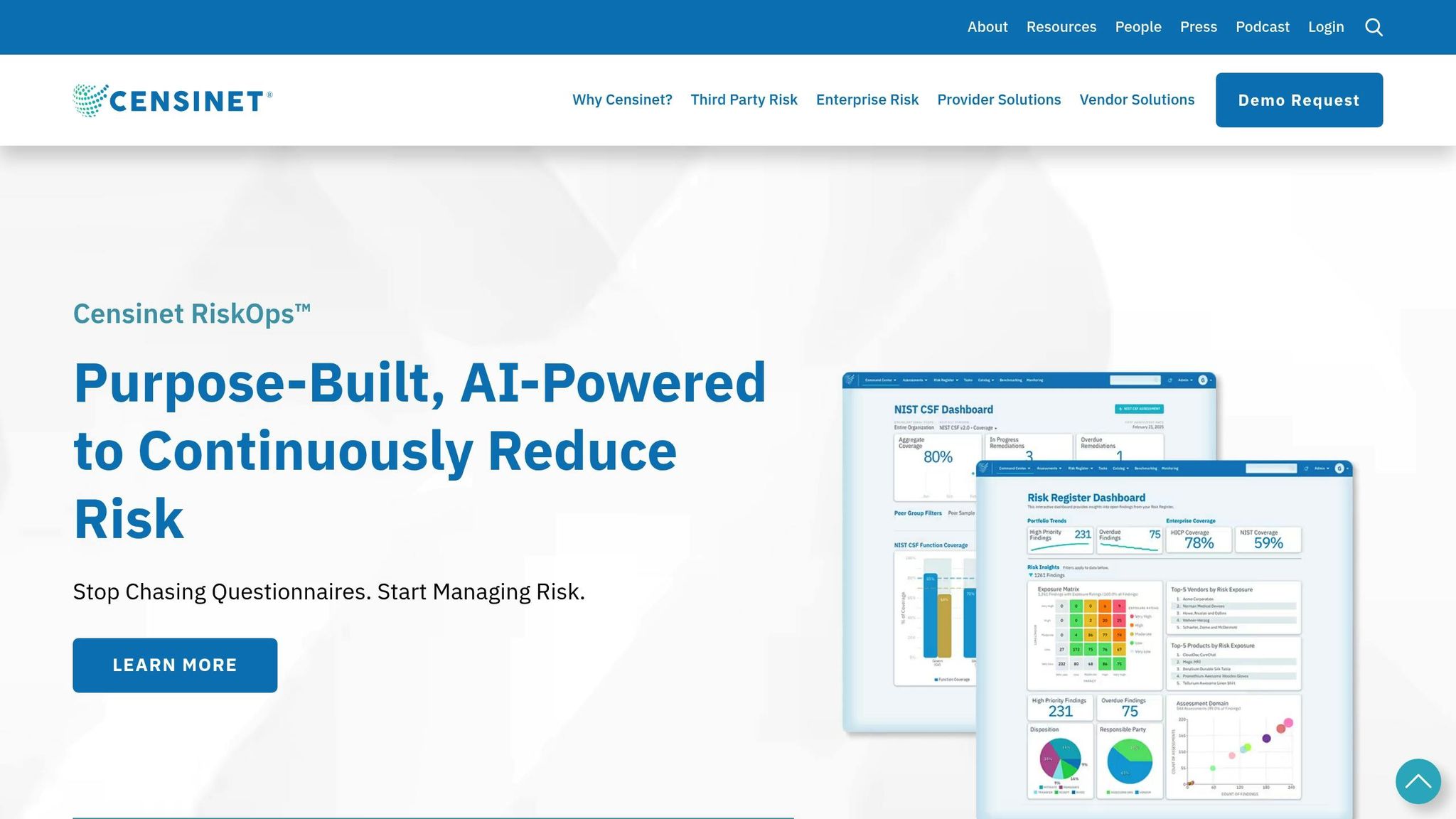
As AI becomes an integral part of clinical workflows, addressing cyber risks effectively demands a centralized strategy. Censinet provides tools designed to simplify risk management, speed up evaluations, and maintain ongoing oversight. These solutions build on earlier discussions about AI vulnerabilities, translating them into actionable risk management practices.
Centralized Risk Tracking with Censinet RiskOps™
Censinet RiskOps™ gathers all risk-related data in one place, giving organizations a clear and comprehensive view of risks across departments and vendor relationships. By pulling data from various sources into a single platform, it ensures organizations can monitor exposures efficiently and stay informed.
Faster Risk Assessments with Censinet AITM

With Censinet AITM, risk assessments are faster and more efficient. The platform automates tasks like vendor questionnaires and evidence collection, streamlining the process while keeping essential human oversight intact.
Continuous AI Governance and Compliance
Censinet RiskOps™ also supports ongoing governance by directing crucial risk insights to stakeholders through a centralized dashboard. This approach helps healthcare organizations stay aligned with U.S. regulations, such as HIPAA and the NIST AI Risk Management Framework, ensuring compliance is a continuous process rather than a one-time effort.
Conclusion
AI-powered cybersecurity tools in healthcare come with a double-edged reality: while they aim to safeguard patient data and clinical systems, they can inadvertently create exploitable vulnerabilities. Recent statistics highlight the ongoing challenges, with healthcare breaches continuing to rise and associated costs reaching alarming levels.
Moving forward, the solution lies in blending technological advancements with rigorous oversight. Ensuring AI security means embedding secure-by-design principles, actively monitoring for issues like model drift and adversarial threats, and adhering to governance frameworks that align with U.S. regulations such as HIPAA.
Censinet RiskOps™ tackles these challenges head-on by centralizing risk tracking, streamlining assessments through Censinet AITM, and equipping decision-makers with actionable AI insights. By incorporating a human-in-the-loop approach, this system strikes a balance - enhancing efficiency through automation while maintaining critical oversight. Such centralized methods support stronger regulatory compliance and proactive risk management.
As industry leaders recognize AI as the top health technology hazard for 2025 [1], organizations must adopt secure-by-design strategies paired with ongoing oversight to protect the 33 million Americans impacted by healthcare data breaches. By combining secure design, continuous monitoring, and centralized governance, the healthcare sector can unlock AI's potential while minimizing its risks.
FAQs
What steps can healthcare organizations take to protect AI systems from data poisoning attacks?
To protect AI systems from data poisoning attacks, healthcare organizations need to focus on using reliable and verified data sources. By implementing rigorous data validation processes, they can ensure that only high-quality, accurate data is used for training and operations.
It's also important to stay vigilant by monitoring for any unusual patterns or anomalies in data inputs. Securing data pipelines to prevent tampering and enforcing strict access controls can further reduce the risk of unauthorized changes. Regularly retraining AI models with thoroughly reviewed datasets adds another layer of protection, helping maintain their reliability and defense against potential threats.
How can healthcare organizations keep their AI systems secure and trustworthy?
To ensure AI systems in healthcare remain secure and reliable, a multi-layered strategy is key. Start with thorough testing and train models using diverse, high-quality data to reduce potential weaknesses. Regular audits, strict access controls, and well-defined security protocols are crucial in protecting these systems from unauthorized access.
Integrating human oversight can add an extra layer of assurance, such as verifying AI-generated outputs. Additionally, continuous monitoring helps identify unusual activity or emerging threats early. By focusing on transparency and proactive measures, healthcare organizations can bolster the safety and dependability of their AI technologies.
Why is human oversight essential for managing AI-related cyber risks in healthcare?
Human involvement plays a critical role in addressing AI-related cyber risks within healthcare. By actively monitoring, validating, and interpreting AI systems, human oversight minimizes the likelihood of issues like adversarial attacks, model tampering, or data breaches.
With skilled professionals in the loop, organizations can spot irregularities, uphold transparency, and ensure accountability. This hands-on approach not only safeguards patient safety but also protects the integrity of sensitive healthcare information, preventing AI tools from becoming potential security threats.
Related Blog Posts
- Clinical AI: Where Innovation Meets Patient Safety
- The Healthcare Cybersecurity Gap: Medical AI's Vulnerability Problem
- Process Revolution: Redesigning Workflows for the AI Era
- Technology Convergence: How AI, Cloud, and Automation Reshape Business Risk
{"@context":"https://schema.org","@type":"FAQPage","mainEntity":[{"@type":"Question","name":"What steps can healthcare organizations take to protect AI systems from data poisoning attacks?","acceptedAnswer":{"@type":"Answer","text":"<p>To protect AI systems from <strong>data poisoning attacks</strong>, healthcare organizations need to focus on using <strong>reliable and verified data sources</strong>. By implementing rigorous data validation processes, they can ensure that only high-quality, accurate data is used for training and operations.</p> <p>It's also important to stay vigilant by monitoring for any unusual patterns or anomalies in data inputs. Securing data pipelines to prevent tampering and enforcing strict access controls can further reduce the risk of unauthorized changes. Regularly retraining AI models with thoroughly reviewed datasets adds another layer of protection, helping maintain their reliability and defense against potential threats.</p>"}},{"@type":"Question","name":"How can healthcare organizations keep their AI systems secure and trustworthy?","acceptedAnswer":{"@type":"Answer","text":"<p>To ensure AI systems in healthcare remain secure and reliable, a multi-layered strategy is key. Start with <strong>thorough testing</strong> and train models using <strong>diverse, high-quality data</strong> to reduce potential weaknesses. Regular audits, <strong>strict access controls</strong>, and well-defined security protocols are crucial in protecting these systems from unauthorized access.</p> <p>Integrating <strong>human oversight</strong> can add an extra layer of assurance, such as verifying AI-generated outputs. Additionally, <strong>continuous monitoring</strong> helps identify unusual activity or emerging threats early. By focusing on transparency and proactive measures, healthcare organizations can bolster the safety and dependability of their AI technologies.</p>"}},{"@type":"Question","name":"Why is human oversight essential for managing AI-related cyber risks in healthcare?","acceptedAnswer":{"@type":"Answer","text":"<p>Human involvement plays a critical role in addressing AI-related cyber risks within healthcare. By actively monitoring, validating, and interpreting AI systems, human oversight minimizes the likelihood of issues like adversarial attacks, model tampering, or data breaches.</p> <p>With skilled professionals in the loop, organizations can spot irregularities, uphold transparency, and ensure accountability. This hands-on approach not only safeguards patient safety but also protects the integrity of sensitive healthcare information, preventing AI tools from becoming potential security threats.</p>"}}]}
Key Points:
How do AI security tools become attack vectors in healthcare?
- AI systems have privileged access, making them high‑value targets for attackers
- Model logic can be manipulated, causing defenses to ignore real threats
- Training pipelines are vulnerable, allowing attackers to inject corrupted data
- Opaque models create blind spots, making tampering difficult to detect
- Compromised AI defenses actively weaken existing security layers
Why is data poisoning so dangerous for clinical AI systems?
- Small data changes create large impacts, triggering misdiagnoses or treatment errors
- Corrupted training data embeds hidden biases, degrading model reliability
- Attacks remain dormant, only revealing themselves under specific conditions
- Poisoned models are costly to rebuild, requiring full retraining
- Patient safety risks escalate, especially in diagnostic or device‑driven workflows
How do adversarial examples undermine AI reliability?
- Microscopic input changes cause major misclassifications
- Attacks bypass human detection, appearing normal to clinicians
- Diagnostic tools become unreliable, impacting life‑critical decisions
- Healthcare imaging is highly vulnerable, including X‑rays and CT scans
- Adversarial robustness testing is essential for safe deployment
What risks arise from AI model manipulation and API exploitation?
- Attackers alter model parameters, changing system behavior
- APIs become direct entry points, enabling unauthorized manipulation
- Dynamic AI models expand risk, as updates introduce new vulnerabilities
- Traditional security tools miss these exploits, which target logic rather than code
- Attackers can reroute outputs, enabling stealthy, long‑term infiltration
What safeguards strengthen AI cyber defense in healthcare?
- Securing training pipelines with provenance checks and strict access controls
- Segregating dev/test/production environments to contain tampering
- Continuous monitoring for model drift, anomalies, and adversarial patterns
- Robustness testing that simulates manipulation and attacks
- Human‑in‑the‑loop oversight to validate critical AI outputs
How does Censinet support scalable AI governance and risk management?
- Centralizes AI risk data, creating a single source of truth
- Automates risk assessments, summarizing evidence and highlighting exposures
- Identifies fourth‑party dependencies, expanding visibility into vendor ecosystems
- Routes alerts to governance committees, ensuring accountability
- Aligns with HIPAA, NIST AI RMF, and security frameworks, strengthening compliance

