
Medical device firmware vulnerabilities can lead to severe risks, from compromising patient safety to exposing sensitive data. To tackle these challenges, specialized tools help identify and mitigate firmware flaws, ensuring compliance with stringent regulations like FDA 524B and IEC 62304. Here's a quick summary of the top tools covered:
Each tool addresses different aspects of firmware security, from development to compliance and real-time risk management. Below is a comparison for quick reference.
Quick Comparison
Early detection of code issues during development
Limited to proprietary code
Developers creating secure medical device firmware
Binary analysis for third-party software risks
Active scans may disrupt critical devices
Managing software supply chain risks
Broad vulnerability coverage with plugins
Lacks medical-specific focus
General IT environments
Scalable scanning and SBOM tracking
Not tailored for medical devices
Large IT infrastructures
Asset discovery and risk scoring
Limited firmware-specific capabilities
Enterprise security
Healthcare-focused risk management and workflows
Requires collaboration across teams
Healthcare IoMT environments
Choosing the right tool depends on whether your focus is on development, supply chain risks, or compliance. For medical devices, tools with specialized features for firmware and regulatory needs offer the best results.

Medical Device Firmware Vulnerability Scanning Tools Comparison Chart
Top 10 Medical Device Vulnerabilities with Myles Kellerman | Ep. 38
1. Parasoft C/C++test
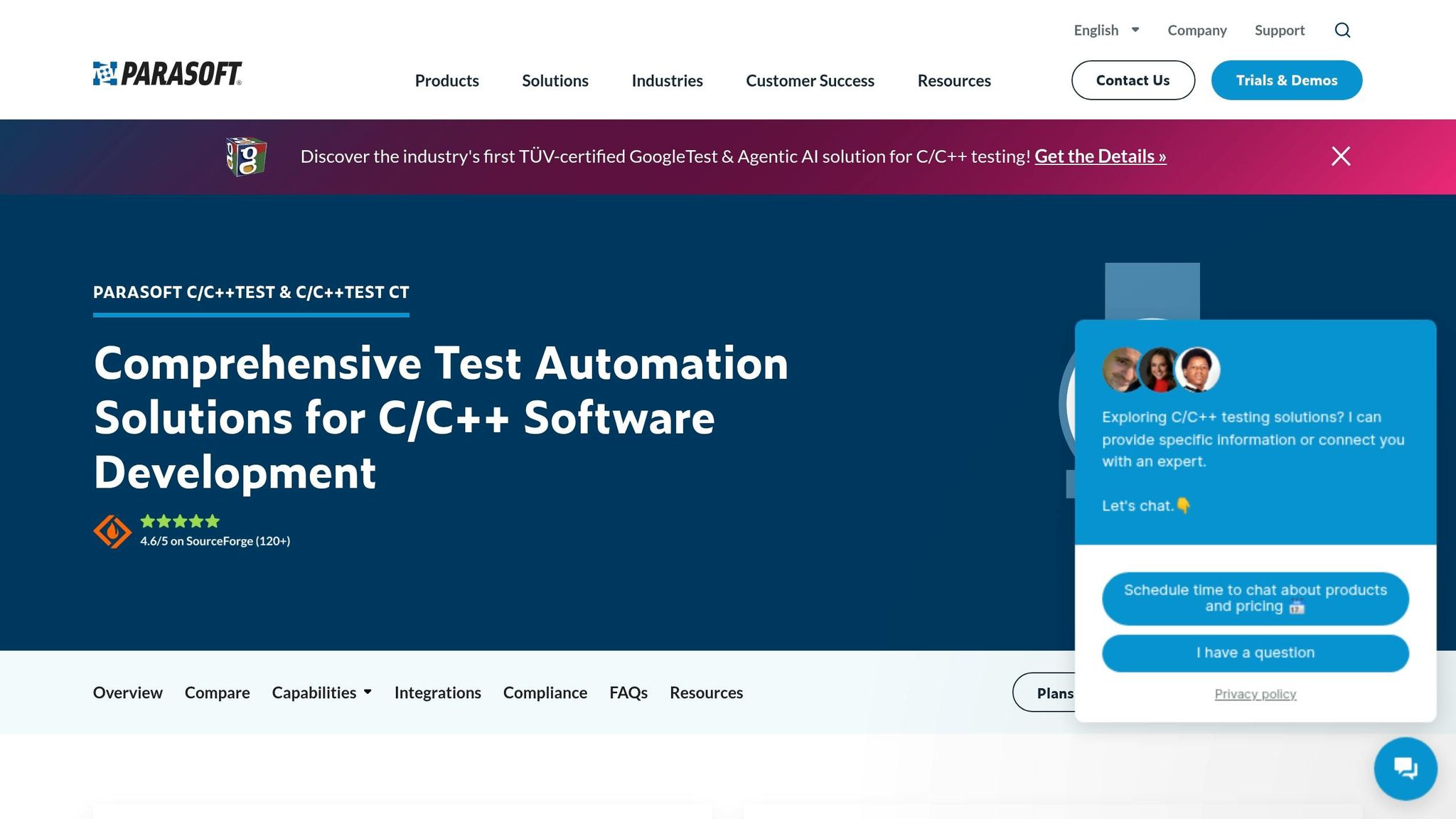
Parasoft C/C++test offers static analysis specifically designed for medical device firmware, aiming to catch vulnerabilities before the code is ever executed. By using a parsing engine to build an abstract representation of the code, the tool employs dataflow analysis to simulate execution paths. This allows it to detect issues like buffer overflows, null pointer dereferences, and memory leaks [2]. Here's a closer look at what sets Parasoft apart when it comes to firmware analysis.
Firmware Analysis Capabilities
Parasoft scans code with over 2,500 checkers that align with security and safety standards, including CWE, CERT, and MISRA [2]. It goes beyond surface-level checks by analyzing execution paths to identify deeply embedded runtime issues. Additionally, Parasoft has received TÜV SÜD certification for IEC 62304 compliance, a crucial standard for medical device software development [2]. This certification ensures the tool meets the rigorous requirements for safety-critical projects.
Streamlined Compliance
Parasoft simplifies compliance with industry-specific Compliance Packs that feature dynamic tracking dashboards. For FDA 510(k) certification, its Qualification Kits automate the creation of necessary tool validation documentation [2]. Inovytec, a company behind the Ventway Sparrow ventilator, relies on Parasoft for compliance, stating:
"Every time we are going to release a new software version of the Ventway Sparrow ventilator, we make sure that the static analysis from Parasoft is configured to run according to the FDA regulation definitions"
.
Smarter Risk Management
The tool’s Process Intelligence Engine uses AI to assess vulnerabilities and prioritize them based on technical impact scores. This includes evaluating the likelihood of exploitation, the complexity of remediation, and potential costs [2][3]. Solero Technologies, which develops automotive systems, highlighted the benefits:
"Parasoft integrates seamlessly into our CI/CD pipeline. We've embedded test automation and static code analysis early in the development cycle – a huge win for quality assurance in safety-critical automotive projects"
.
2. Finite State Platform
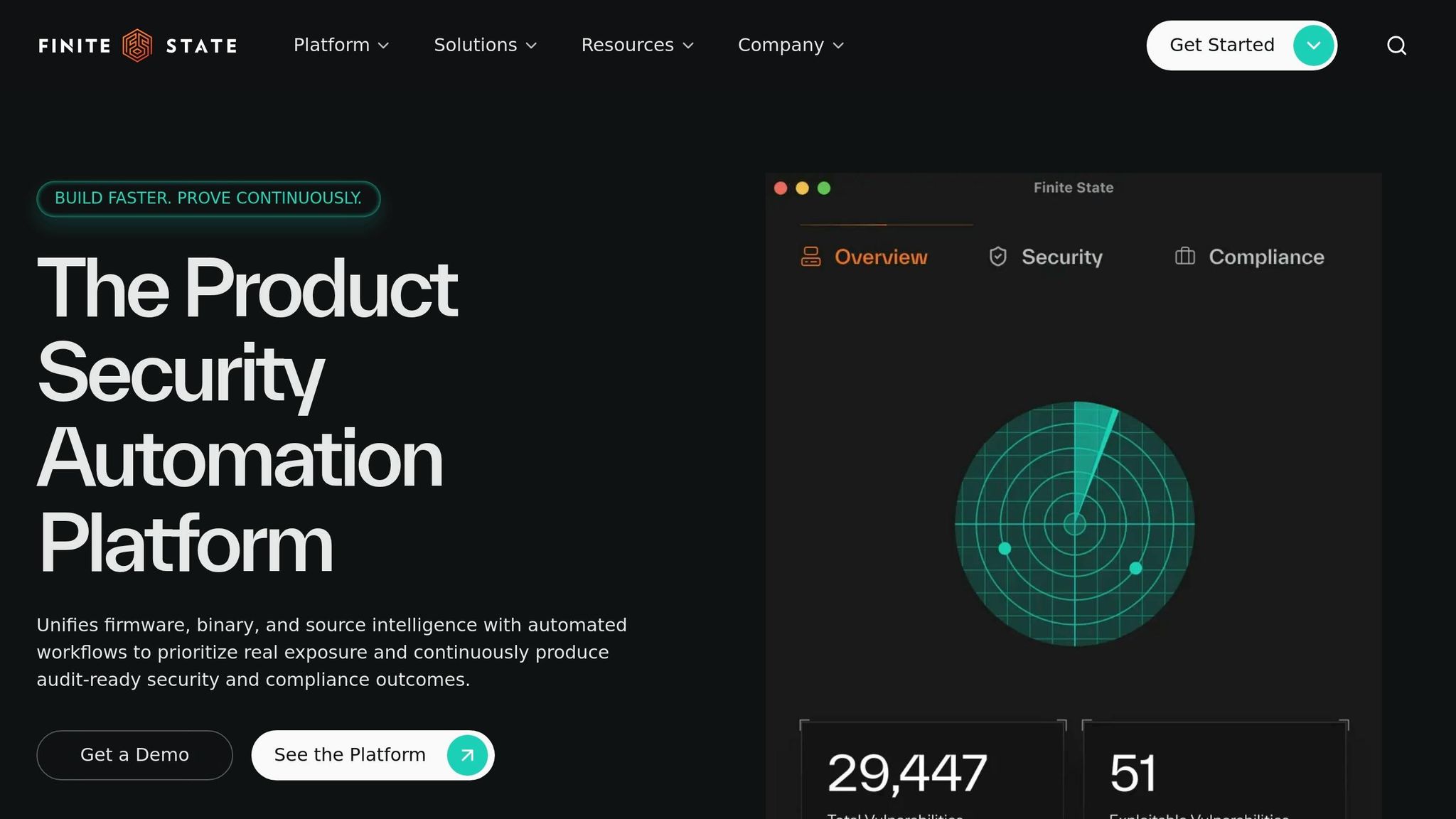
The Finite State Platform uses a binary-first approach to tackle firmware security. It can automatically unpack over 130 binary formats and works with more than 30 architectures, revealing file systems and libraries - even in encrypted or proprietary firmware [5][6]. Instead of relying solely on source code, it employs Binary Software Composition Analysis (SCA) to extract critical details like function names, control flow graphs, and symbols directly from compiled binaries. Its Binary Static Application Security Testing (SAST) goes further, identifying zero-day vulnerabilities by analyzing decompiled code for unsafe function calls [5]. This approach uncovers issues that traditional source code analysis might miss.
Firmware Analysis Depth
What sets Finite State apart is its reachability analysis. This process evaluates call graphs and entry points to determine if vulnerable code paths can actually be executed during runtime [5][7]. By focusing on exploitable vulnerabilities, it separates realistic threats from hypothetical ones. A Product Security Lead from a connected devices company highlighted its value:
"Reachability analysis cut our false positives by 80%. Our developers now trust the alerts because they know they're real, exploitable vulnerabilities."
Beyond runtime evaluations, the platform enhances visibility into the supply chain, providing a deeper understanding of potential risks.
SBOM Support
The platform offers robust support for Software Bill of Materials (SBOMs), working with formats like SPDX, CycloneDX, and VEX [5]. It can generate, import, and enrich SBOMs, aligning binary analysis with source code documentation to uncover "shadow components" - such as legacy code or supplier drivers that only appear in the final product. These dynamic SBOMs notify teams when new CVEs impact components in previously scanned builds [9].
Compliance Automation
Finite State simplifies regulatory compliance by mapping security findings to frameworks like FDA 524B, EU Cyber Resilience Act (CRA), ISO, and IEC 62304 [6][8]. It can automatically generate audit-ready evidence and VEX documents, offering defensible "not affected" justifications for unreachable vulnerabilities - essential for FDA submissions [6][7]. A Head of Compliance from the energy and utilities sector shared their experience:
"Compliance reporting that used to take weeks now takes hours. The platform automatically maps our security posture to regulatory requirements."
Risk Prioritization
The platform doesn’t stop at compliance; it prioritizes risks using reachability data combined with exploit intelligence from over 200 sources. Instead of relying solely on severity scores, it focuses on vulnerabilities that pose real-world risks [6][7]. This targeted approach reduces noise by up to 90%, enabling security teams to concentrate on the most pressing threats for their firmware [6][7].
3. Nessus

Nessus uses a plugin-based approach for firmware vulnerability scanning, boasting an impressive library of over 316,000 plugins, with more than 100 new ones added every week. These plugins help identify vulnerabilities, missing patches, and misconfigurations, covering over 116,000 CVEs [10]. The platform supports both credentialed (authenticated) and non-credentialed scanning methods [11], providing a detailed look into device internals while maintaining an impressively low false positive rate of just 0.32 defects per 1 million scans [10].
Firmware Analysis Depth
For environments like healthcare, where devices often operate in air-gapped or isolated settings, Nessus offers an Offline Mode. This mode allows thorough assessments without requiring internet access [11]. This feature is especially valuable for medical devices that must remain disconnected from external networks, enabling security teams to rely on accurate results without being bogged down by false positives [10].
Compliance Automation
Nessus simplifies regulatory compliance with over 450 pre-built templates tailored for frameworks like HIPAA, NIST 800-53, CIS, and DISA STIG. It also offers flexible deployment options, including the use of devices like Raspberry Pi [10]. These templates significantly reduce the manual workload during audits and extend scanning capabilities to distributed or embedded medical device systems.
Risk Prioritization
Instead of treating every vulnerability equally, Nessus uses a Vulnerability Priority Rating (VPR) system with scores ranging from 0.1 to 10.0 [12][13]. This machine-learning-driven feature evaluates over 109,000 vulnerabilities each night to identify the "critical 3%" that pose the highest risk [12][13]. By combining VPR with Exploit Prediction Scoring System (EPSS) scores [10], Nessus ensures remediation efforts target the vulnerabilities most likely to be exploited.
Pricing for Nessus Professional starts at about $4,790 for a 1-year license. For personal projects, Nessus Essentials is available for free, though it's limited to scanning up to 16 IP addresses [10][11]. This robust prioritization framework makes Nessus a cost-effective tool for managing vulnerabilities and sets the stage for exploring the unique capabilities of the next tool.
4. Qualys
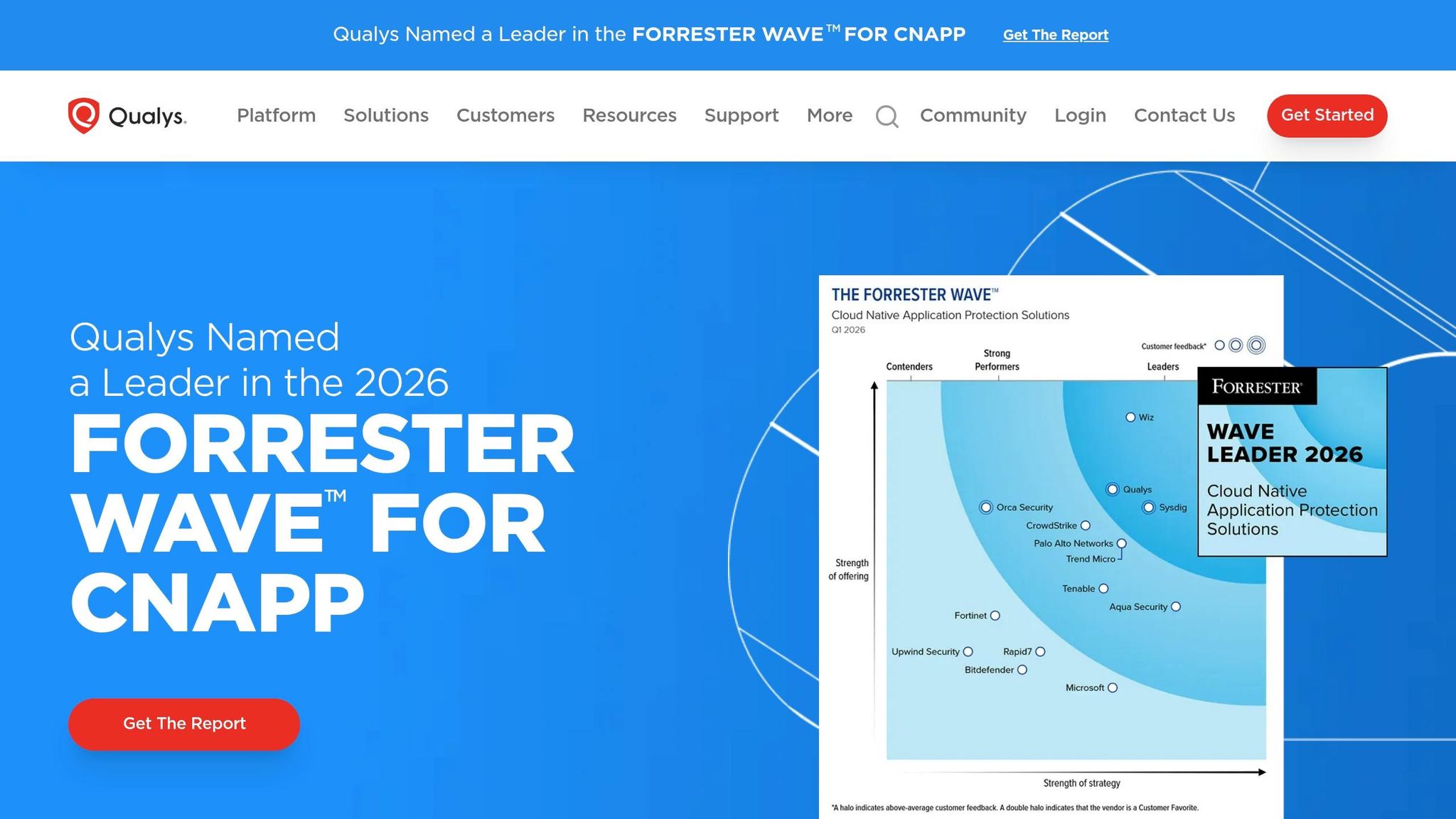
Qualys uses a combination of black-box scanners and passive sensors to provide comprehensive visibility into medical devices across both cloud and on-premise environments [16]. It performs Runtime Software Composition Analysis (SCA) to inventory software components within connected devices [14]. This capability is especially useful for healthcare organizations managing diverse fleets of medical devices, as its passive sensors monitor network traffic in real time without disrupting clinical workflows [16]. This creates a solid foundation for detailed analysis and proactive risk management.
Firmware Analysis Depth
Qualys goes beyond basic vulnerability detection, achieving accuracy levels of over 99.99966%, which virtually eliminates false positives [15]. It’s also capable of identifying vulnerabilities up to six times faster than many competitors [14]. With more than 60,000 active scanners and 55,000 virtual scanners deployed worldwide [16], Qualys provides the infrastructure necessary for large-scale medical device assessments. Additionally, its passive discovery feature detects Advanced Persistent Threat (APT) traffic without interrupting clinical operations [16].
SBOM Support
Qualys takes its scanning capabilities further by offering advanced Software Composition Analysis (SwCA) to manage embedded software components. It maintains a dynamic repository of Software Bills of Materials (SBOM) with over 15,000 signatures, covering more than 12,000 CVEs [17]. This repository provides visibility into both open-source and commercial software components, helping organizations identify vulnerabilities in software stacks and mitigate supply chain risks, such as those linked to Log4Shell. Cloud Agents and passive sensors work together to identify IoT and embedded devices across the network, ensuring real-time visibility [35, 33].
Risk Prioritization
To help organizations focus on the most pressing vulnerabilities, Qualys uses advanced threat intelligence for prioritization. Its TruRisk engine aggregates data from over 25 threat intelligence sources, going beyond standard CVSS scores to prioritize vulnerabilities based on exploitability and business context [14]. This approach has allowed organizations to reduce critical vulnerabilities by 85% and cut Mean Time to Remediate (MTTR) by 60%, thanks to integrated patching and remediation workflows [14].
Tom Scheffler, Security Operations Manager at Cintas, summed up the platform’s efficiency:
"Qualys scans it, finds it, patches it. That's it. In terms of time, manpower, planning, and the cost reduction in savings of labor dollars...huge"
.
On top of that, Qualys automates compliance reporting for healthcare standards such as HIPAA, PCI DSS 4.0, and CIS benchmarks [31, 32].
sbb-itb-535baee
5. Rapid7 InsightVM
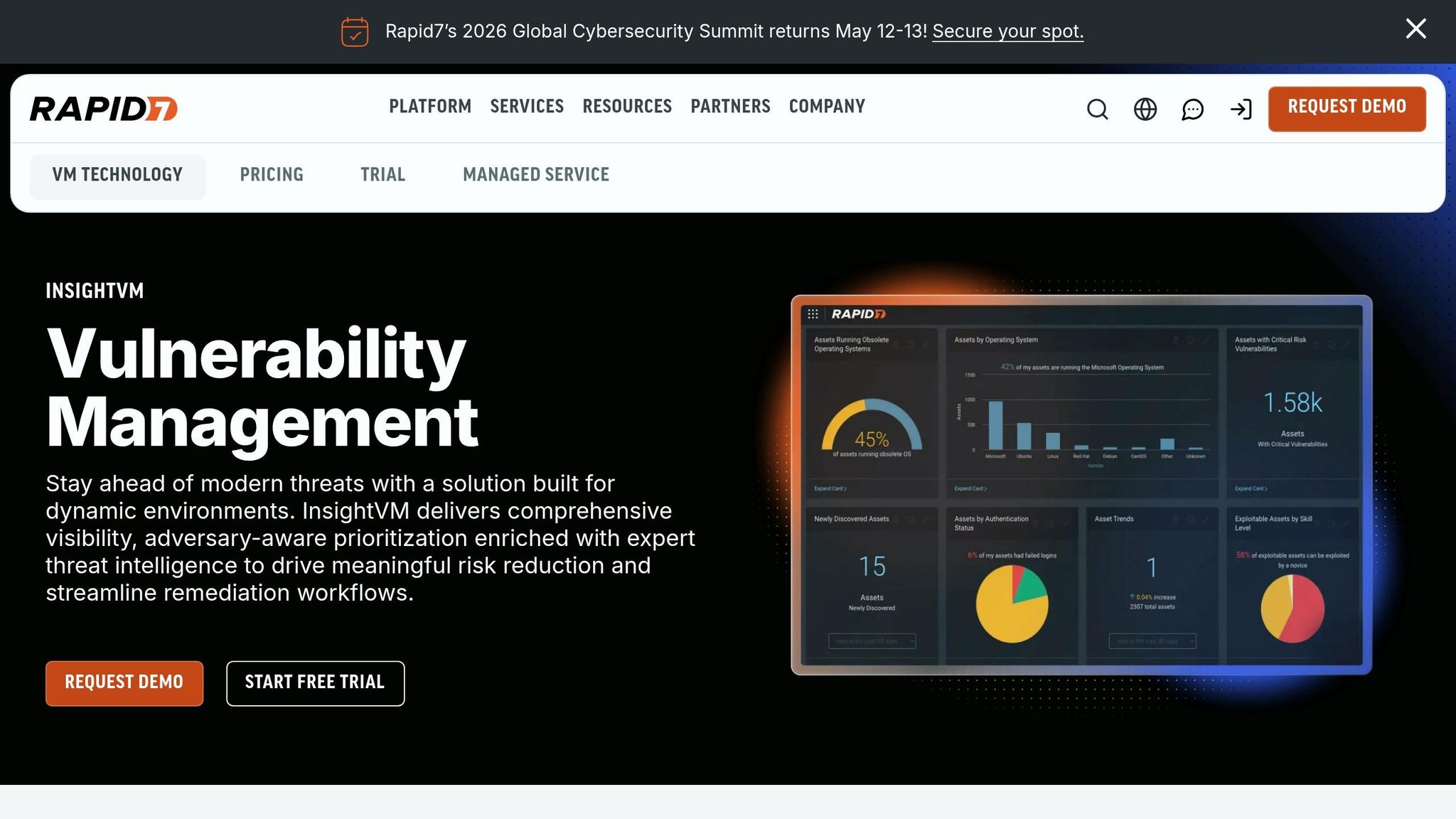
Rapid7 InsightVM offers a practical way to secure medical devices by emphasizing asset discovery and fingerprinting rather than diving deep into binary firmware inspection. The platform identifies critical details like open ports, running services, and operating systems (including proprietary RTOS) to classify devices across the network. This method is especially useful in healthcare, where traditional vulnerability scanners often fail to address firmware-specific challenges.
Firmware Analysis Depth
InsightVM uses fingerprinting to catalog medical devices without interrupting clinical operations. Joe Agnew, a Security Analyst at Rapid7, highlights the limitations of traditional scanners: “Information security should never harm a patient.” Instead, he recommends conducting detailed tests in pre-production environments. By identifying devices accurately, InsightVM lays the groundwork for more effective risk management.
Risk Prioritization
One standout feature of InsightVM is its Active Risk scoring model, which uses a scale from 1 to 1,000 - offering a more nuanced approach than standard CVSS metrics. The platform integrates real-world threat intelligence from Rapid7 Labs and its Emergent Threat Response program to identify vulnerabilities that are actively being exploited. It also uses AI-based CVSS scoring to predict severity levels based on historical data and assigns a CVSS score of 10.0 to any software or operating system that has reached end-of-life.
Security teams can further enhance risk prioritization by tagging medical devices based on their clinical functions or ePHI capabilities, ensuring that high-risk assets automatically receive greater attention. This approach aligns seamlessly with InsightVM's compliance-focused features.
Compliance Automation
InsightVM simplifies compliance by automating assessments for HIPAA, PCI DSS, and CIS standards. The platform updates its threat database every six hours, ensuring it captures the latest vulnerabilities. It also generates "Top Remediation" reports to guide security teams on immediate actions. Neil Johnson, Security Manager at Evercore, shares:
"We don't even have to wait for a scan to finish before we can start patching - we can do it straight away and then instantly see our risk score go down."
At a cost of $1.93 per asset per month for up to 500 assets [18], InsightVM offers an affordable solution for healthcare organizations managing complex medical device inventories.
6. Censinet RiskOps™
Censinet RiskOps™ brings together IT, Risk, Cybersecurity, and BioMed teams to tackle the challenges of medical device security and firmware risk in healthcare. With the growing complexity of the Internet of Medical Things (IoMT) - where modern healthcare settings often have over 10 connected devices per patient bed - this platform addresses a pressing need for streamlined risk management [19].
Risk Prioritization
The platform simplifies risk management by automatically assigning risk ratings and using its Digital Risk Catalog™ to compare vulnerabilities against industry benchmarks. This generates concise reports that help guide teams toward effective corrective actions. Instead of working in silos, healthcare teams can conduct quick security assessments and act on prioritized risks.
Censinet RiskOps™ also streamlines remediation with Automated Corrective Action Plans (CAPs). These plans allow teams to track progress, delegate tasks to specialists like BioMed staff, and maintain accountability. The platform’s dashboards offer filtered views for specific devices while also providing enterprise-wide insights for leadership. This ensures that critical firmware vulnerabilities are addressed promptly and effectively, from individual devices to the organizational level.
Additionally, these risk insights feed directly into compliance workflows, ensuring vulnerabilities are managed in line with regulatory standards.
Compliance Automation
Censinet RiskOps™ takes the hassle out of compliance by automating the processing of Manufacturer Disclosure Statement for Medical Device Security (MDS2) forms. It supports both the 2013 and 2019 versions, capturing device-specific security details without the need for manual data entry. This automation includes parsing forms, gathering evidence, and managing a centralized digital inventory - creating a clear audit trail for both internal and external reviews.
Given that medical device security often receives minimal attention within healthcare cybersecurity practices [19], this centralized approach ensures that firmware vulnerabilities are actively monitored and resolved. By combining Automated CAPs with clear task assignments, the platform keeps BioMed and IT teams aligned and focused on addressing high-risk issues efficiently.
Feature Comparison Table
When selecting a tool, it's important to align your choice with your organization's specific needs, available resources, and device environment. Below is a comparison of tools, detailing their strengths, limitations, and ideal use cases.
Detects security flaws and quality issues in proprietary code during development, allowing early fixes.
Focuses only on proprietary code; requires integration with Software Composition Analysis (SCA) for third-party and open-source risks.
Best for development teams creating medical device firmware that demands secure, high-quality code.
Addresses software supply chain risks for both open-source and commercial third-party software, offering active and passive scanning.
Active scanning needs careful management to avoid disrupting critical devices; passive scanning may lack depth.
Suited for organizations managing complex software bills of materials and addressing supply chain risks.
A general-purpose vulnerability scanner offering broad coverage.
Not tailored to medical regulations or real-time operational needs; may cause device crashes or miss firmware-specific issues.
Works well in standard IT environments but not for specialized medical device firmware.
Provides enterprise-scale vulnerability management with detailed reporting.
Does not support medical device-specific protocols or real-time operational constraints.
Ideal for large IT infrastructures needing general vulnerability management.
Offers in-depth vulnerability assessment with risk prioritization features.
Traditional methods may not secure connected medical devices effectively, especially in no-patch scenarios.
Suitable for general enterprise security but limited for medical device firmware with patching constraints.
Brings IT, risk, cybersecurity, and biomedical teams together with risk prioritization and automated workflows.
Requires a commitment to collaborative workflows for risk management.
Best for healthcare organizations managing Internet of Medical Things (IoMT) environments.
These tools showcase varying strengths and challenges in addressing firmware vulnerabilities within healthcare settings. General IT scanners often fall short when dealing with the unique demands of medical environments, such as regulatory compliance, operational constraints, and patient safety concerns. As highlighted, combining Static Application Security Testing (SAST) with Software Composition Analysis (SCA) aligns with FDA guidelines, while risk-based prioritization helps address practical threats effectively [20][21].
Conclusion
Firmware vulnerability scanning tools play a critical role in safeguarding patient safety, meeting regulatory standards, and bolstering cybersecurity efforts in healthcare. With medical devices averaging 6.2 vulnerabilities per device and 62% of major vulnerabilities in U.S. hospitals left unaddressed, the risks are undeniable [22]. Add to that the staggering cost of a cyberattack - estimated at $80,000 per hour if hospital operations are disrupted - and it’s clear that proactive security measures are not just about compliance but also about financial survival [22].
Different tools cater to specific stages of the security lifecycle. For example, Parasoft C/C++test supports secure development by helping manufacturers write safer code from the outset. Tools like Finite State focus on managing software supply chain risks, while general-purpose scanners such as Nessus and Qualys provide broad IT coverage but lack the specialized features required for medical devices. For healthcare organizations managing complex IoMT environments, Censinet RiskOps™ offers a collaborative approach to risk management, bringing together IT, cybersecurity, and biomedical teams with automated workflows and risk prioritization. The right choice depends on your organization's unique security and compliance needs.
When selecting a solution, consider whether your priority lies in pre-market activities like static analysis and SBOM creation or post-market needs like real-time monitoring. Tools designed specifically for medical environments can reduce false positives by up to 95% compared to general-purpose scanners [1]. This precision is vital for maintaining operational efficiency and security.
Integration is another key factor. Look for tools that seamlessly integrate into existing CI/CD workflows, enabling continuous reporting through platforms like GitHub Actions or Azure DevOps. Solutions that offer FDA-ready reporting - including formats like VEX, VDR, and SBOM - can also speed up regulatory compliance efforts.
Cybersecurity in healthcare is an ongoing process. Continuous monitoring and proactive defenses are essential to protect both patient data and lives. By combining secure development practices, transparency in the software supply chain, and robust operational risk management, healthcare organizations can create a resilient defense system that addresses the unique challenges of medical device security.
FAQs
How do I choose between source-code scanning and binary firmware scanning?
Choosing between source-code scanning and binary firmware scanning comes down to your security objectives and where you are in the device lifecycle.
For the best results, combining both methods can be effective. This approach provides early detection during development while offering a comprehensive view of vulnerabilities in the finished firmware.
Can firmware scanning be done safely without disrupting patient care?
Yes, firmware scanning can be performed safely without interfering with patient care. Tools such as the Medical Device Security Analyzer are designed to pinpoint vulnerabilities and recommend ways to address them, ensuring devices remain secure. Additionally, platforms like Censinet RiskOps™ offer continuous threat detection and real-time monitoring, making it easier to manage risks effectively while prioritizing patient safety.
What scan outputs are most helpful for FDA 524B and IEC 62304 compliance?
When it comes to meeting FDA 524B and IEC 62304 standards, certain scan outputs prove especially useful. These include vulnerability scan results, risk assessments, and FDA-ready reports.
Tools like Censinet RiskOps™ simplify this process by organizing critical evidence, automating the tracking of vulnerabilities, and ensuring smoother alignment with regulatory requirements.
Related Blog Posts
- Best Practices for FDA IoT Cybersecurity Compliance
- Study: 162 New Medical Device Vulnerabilities Found
- Why Patch Validation Matters for Medical Devices
- Medical Device Protocol Cybersecurity Basics
{"@context":"https://schema.org","@type":"FAQPage","mainEntity":[{"@type":"Question","name":"How do I choose between source-code scanning and binary firmware scanning?","acceptedAnswer":{"@type":"Answer","text":"<p>Choosing between <strong>source-code scanning</strong> and <strong>binary firmware scanning</strong> comes down to your security objectives and where you are in the device lifecycle.</p> <ul> <li> <strong>Source-code scanning</strong>: This works well when you have access to the original code. It allows you to catch potential issues early during development, making it easier to address vulnerabilities before they become a problem. </li> <li> <strong>Binary scanning</strong>: This is more suited for assessing compiled firmware, especially when dealing with third-party components or already-deployed devices. It helps uncover vulnerabilities in the final product. </li> </ul> <p>For the best results, combining both methods can be effective. This approach provides early detection during development while offering a comprehensive view of vulnerabilities in the finished firmware.</p>"}},{"@type":"Question","name":"Can firmware scanning be done safely without disrupting patient care?","acceptedAnswer":{"@type":"Answer","text":"<p>Yes, firmware scanning can be performed safely without interfering with patient care. Tools such as the <strong><a href=\"https://www.censinet.com/perspectives/medical-device-security-analyzer\">Medical Device Security Analyzer</a></strong> are designed to pinpoint vulnerabilities and recommend ways to address them, ensuring devices remain secure. Additionally, platforms like <strong>Censinet RiskOps™</strong> offer continuous threat detection and real-time monitoring, making it easier to manage risks effectively while prioritizing patient safety.</p>"}},{"@type":"Question","name":"What scan outputs are most helpful for FDA 524B and IEC 62304 compliance?","acceptedAnswer":{"@type":"Answer","text":"<p>When it comes to meeting FDA 524B and IEC 62304 standards, certain scan outputs prove especially useful. These include <strong>vulnerability scan results</strong>, <strong>risk assessments</strong>, and <strong>FDA-ready reports</strong>.</p> <p>Tools like <em>Censinet RiskOps™</em> simplify this process by organizing critical evidence, automating the tracking of vulnerabilities, and ensuring smoother alignment with regulatory requirements.</p>"}}]}
