
AI in healthcare often operates as a "black box" - producing predictions without explaining its logic. This lack of transparency creates risks for clinicians, patients, and healthcare systems alike.
Key issues include:
To address these challenges, healthcare organizations are focusing on three main strategies:
These steps not only improve safety but also help build trust in AI tools. By prioritizing transparency, healthcare leaders can ensure AI complements clinical expertise rather than undermining it.

Three Core Transparency Strategies for Healthcare AI Systems
Trustworthy Medical AI Addressing Reliability & Explainability in Vision Language Models for Health
sbb-itb-535baee
Core Transparency Strategies for Healthcare AI
Healthcare organizations need clear strategies to make AI more accessible and understandable. The focus is shifting from just achieving high accuracy to ensuring clinical acceptance, seamless workflow integration, and regulatory compliance. This shift emphasizes building transparency into AI systems from the ground up, rather than relying on retroactive fixes.
"Accuracy alone does not establish trust."
Three key strategies are essential for creating transparent AI in healthcare: interpretability and explainability, auditability of AI decisions, and ethical governance frameworks. Each of these addresses unique aspects of the "black box" issue, working together to ensure that healthcare professionals can trust, verify, and rely on AI systems.
Interpretability and Explainability
Modern AI systems are designed to highlight the critical variables - like white blood cell counts or blood pressure trends - that influence predictions. This helps clinicians check whether the AI’s reasoning aligns with established medical knowledge.
For example, visual tools can show radiologists which areas of a diagnostic scan contributed to a particular finding, enabling them to confirm the results rather than blindly accept them. Confidence indicators, such as an 87% probability score, are also contextualized to help clinicians understand what those numbers mean in practical terms, reducing the risk of misinterpretation.
"Explainable AI provides the bridge from raw capability to operational trust."
Role-specific insights and layered audit trails ensure that data scientists, clinicians, and compliance teams can validate and monitor AI decisions effectively. This layered approach balances operational efficiency with governance needs.
Scenario sensitivity testing is another valuable tool. It shows how slight changes in input data can impact AI outcomes, reinforcing clinical reasoning and clarifying where the AI's decision boundaries lie. Additionally, maintaining strict version control and a detailed history of model updates ensures that every input variable is clinically validated, not just statistically linked to outcomes.
Auditability of AI Systems
Auditability is about creating a detailed record of every AI decision. This includes logging the source data, processing steps, and confidence scores for each outcome [2]. Comprehensive documentation explains which algorithms were used, what features influenced the decision, and the specific model version in play. This creates a full "paper trail" for clinical reviews and regulatory compliance.
The benefits of audit trails are tangible. Some organizations have reported a 15–20% boost in first-pass accuracy rates, a 60% drop in disputes over AI-processed claims, and a 75% reduction in time spent on compliance audits [2]. For instance, a clinic processing 500 documents daily could generate 50 GB of audit logs each month, highlighting the importance of efficient storage solutions.
Additional measures, like cryptographic tools (hashing and digital signatures) and write-once storage systems, ensure that audit logs are tamper-proof. These logs can even serve as legal evidence if needed. Correlation IDs further enhance transparency by linking related steps across systems - such as AI engines, electronic health records, and billing systems - providing a clear data lineage from input to decision.
Ethical AI Governance Frameworks
The NIST AI Risk Management Framework offers guidance on aligning AI safety measures with existing healthcare regulations [4]. It helps organizations identify, assess, and mitigate AI risks while addressing the unique challenges of healthcare.
Similarly, the EU AI Act categorizes many healthcare AI systems as "high-risk", requiring detailed transparency measures, such as comprehensive technical documentation, instructions for use, and human oversight [3]. These regulations emphasize the importance of building transparent and accountable AI systems.
Common principles across these frameworks include ongoing monitoring of AI systems in live environments, structured processes to address inequities across demographic groups, and clear accountability for AI-driven decisions. As regulatory scrutiny increases, transparency is becoming a fundamental expectation in healthcare AI systems.
Building Accountability in Healthcare AI
Accountability plays a critical role in ensuring transparency in healthcare AI. Healthcare organizations need to establish clear lines of responsibility for situations where an AI system makes an error, shows performance declines, or generates biased outcomes. To achieve this, organizations should focus on developing strong internal systems while also collaborating with external entities. This combination helps maintain the safety and effectiveness of AI systems throughout their lifecycle.
Internal Accountability Mechanisms
AI governance committees are key to internal oversight. These teams bring together experts from various fields - clinicians, data scientists, compliance officers, and IT security professionals - to evaluate AI systems before they are implemented. Regular reviews of these systems focus on important metrics such as prediction accuracy, false positive rates, and potential bias.
Training staff is another crucial element. Employees must understand how to use AI tools, recognize their limitations, and know when to override them. Training programs should emphasize ethical considerations, the importance of reporting errors, and methods for identifying performance issues. This kind of preparation not only enhances safety but also fosters a culture of transparency in AI decision-making. Additionally, organizations should implement systems for reporting errors and performance issues directly to manufacturers and regulators. Using human-centered design principles ensures that transparency efforts meet the specific needs of the intended audience, whether they are technical experts or healthcare providers [5][6].
Once internal mechanisms are in place, external oversight becomes the next layer of accountability.
External Oversight and Collaboration
External validation offers independent assurance of an AI system's safety and reliability. By October 2023, the FDA had authorized nearly 700 AI/ML-enabled medical devices. The agency maintains a public database where patients and healthcare providers can access safety data, marketing summaries, and reports on adverse events [5]. Additionally, the FDA, Health Canada, and the UK's MHRA have collectively outlined 10 guiding principles for Good Machine Learning Practice (GMLP) to promote the development of safe and effective AI tools [6].
"The FDA is a trusted source of information for patients on manufacturers' AI/ML devices and recommended manufacturers work with the FDA on transparent communications regarding these devices."
Contracts with AI vendors should mandate timely alerts about model updates and emerging risks [6]. Local acceptance testing is another safeguard, ensuring that AI systems perform well in specific clinical environments [6].
Accountability extends beyond manufacturers and regulators through multi-stakeholder engagement. Payors monitor how AI performs in real-world settings to ensure patient outcomes improve. Meanwhile, professional societies and government agencies work to simplify complex AI data into understandable resources for patients and caregivers [5]. This collaborative effort is critical for evaluating bias and performance across diverse patient populations, particularly those not adequately represented in the original training data [5].
Using Censinet RiskOps for AI Risk Management
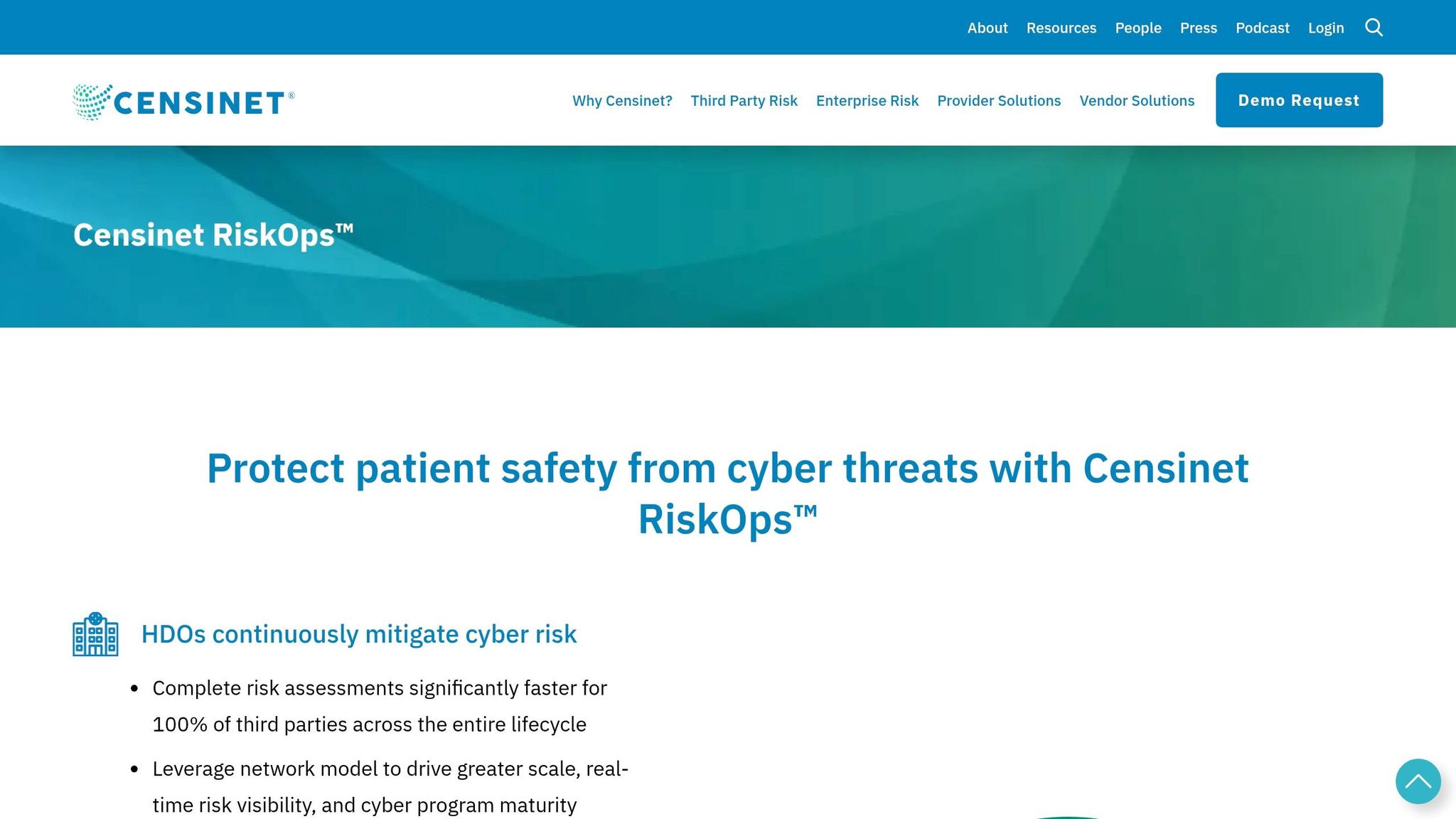
Censinet RiskOps bridges the gap between theoretical frameworks and practical application in healthcare risk management. This centralized platform reshapes how organizations handle AI systems by automating transparency workflows and maintaining detailed audit trails.
Accelerating AI Risk Assessments
Censinet RiskOps speeds up AI risk assessments by automating the collection and validation of evidence. By cross-referencing AI model documentation - like training datasets and algorithm explainability reports - against regulatory standards, the platform flags gaps in real time. This automation cuts manual review timelines from weeks to days while maintaining audit-ready logs.
For example, a major U.S. health system used Censinet RiskOps to assess over 50 AI vendors. The platform automated 70% of risk questionnaires and validated 95% of evidence, leading to improved transparency in AI procurement. This approach reduced compliance risks under HIPAA, expedited vendor onboarding, and provided clear governance for auditors [11][13].
The platform also employs delta-based reassessments, focusing only on changes in vendor profiles rather than re-evaluating all data. This approach reduces the typical risk assessment time to less than one day [8]. Healthcare teams can quickly detect biases or vulnerabilities in AI tools, such as predictive analytics systems, using standardized risk reports that provide traceable data inputs and decision logic.
"Censinet RiskOps allowed 3 FTEs to go back to their real jobs! Now we do a lot more risk assessments with only 2 FTEs required."
The Cybersecurity Data Room further supports continuous oversight by maintaining a record of risk changes over time. Automated updates to residual risk ratings ensure that AI-related threats are consistently monitored [8].
In addition to streamlining assessments, the platform's governance features provide continuous oversight and enable swift corrective actions.
AI Governance and Oversight Features
After completing rapid assessments, Censinet RiskOps ensures ongoing risk management through robust governance tools. The platform integrates vendor and internal system feeds to track AI-related risks and policies in real time. It sends alerts for policy deviations, such as unapproved model updates, ensuring governance for applications like AI triage systems and boosting operational transparency [10][11].
Automated Corrective Action Plans (CAPs) address security gaps by tracking them to resolution, promoting accountability for risk mitigation. The platform's "single pane of glass" view translates technical risks into straightforward terms suitable for Board-level reporting [8].
Policy management modules allow organizations to establish AI ethics standards, while automated workflows streamline approvals and multi-stakeholder reviews. Features like immutable audit logs and assignee tracking enhance transparency throughout AI deployment cycles [9][12]. A centralized policy library links directly to identified risks, with role-based access ensuring accountability remains intact.
Censinet AI also improves collaboration by assigning key findings and tasks to the appropriate stakeholders, such as members of AI governance committees. This centralized coordination ensures that the right teams address the right issues promptly, enabling continuous oversight across the organization.
Meeting AI Compliance Requirements in Healthcare
The use of AI in healthcare now operates within a maze of federal and state regulations that go far beyond HIPAA. One of the most notable developments is the HTI-1 Final Rule from the Office of the National Coordinator for Health Information Technology (ONC). Effective January 1, 2025, this rule introduces transparency standards for "Predictive Decision Support Interventions" (Predictive DSIs). These are AI and machine learning models integrated into certified health IT systems, which are used by over 96% of U.S. hospitals and 78% of office-based physicians [15][16].
For healthcare organizations, aligning AI practices with HIPAA and the latest AI-specific mandates requires detailed risk assessments and thorough documentation. Let’s break it down.
HIPAA and AI-Specific Laws
HIPAA’s Privacy and Security Rules remain the foundation for AI compliance in healthcare. However, traditional Business Associate Agreements (BAAs) often fail to address the complexities of AI. Critical questions emerge, such as whether vendors can use Protected Health Information (PHI) for training models or how patient data embedded in model weights is handled after a contract ends.
"The traditional BAA template that worked for your EHR vendor five years ago almost certainly doesn't cover AI-specific scenarios like model training on patient data." - AI Compliance Documents
Organizations must update their Security Rule risk analyses to address new AI vulnerabilities. These include prompt injection attacks, model inversion (where attackers extract training data), and hallucinations that could introduce inaccurate PHI into clinical records. Beyond traditional access controls, technical safeguards should include detailed audit logs. These logs should track which AI processes accessed PHI, when, and what outputs were generated.
The ONC's HTI-1 Final Rule takes transparency a step further. Developers of Predictive DSIs must now disclose 31 "source attributes", covering everything from training data origins to external validation results and performance metrics [14]. This shift pushes AI systems away from opaque "black box" models toward accountability.
Regulation/Framework
Focus Area
Key Requirement
Algorithm Transparency
Disclosure of 31 source attributes for predictive models
Data Standardization
Standard for EHI starting January 1, 2026
PHI Protection
Risk analysis addressing AI-specific vulnerabilities
Safety & Fairness
Analysis of validity, reliability, and bias
Starting in 2025, developers must regularly review their source attribute data and risk management practices [14]. By January 1, 2026, USCDI Version 3 will set a baseline standard for data in certified health IT systems, aiming to address disparities in AI training datasets [15][16].
State-level regulations, such as California’s CCPA/CPRA and Washington’s My Health My Data Act, add another layer of complexity. These laws often impose stricter transparency and consumer rights standards than HIPAA, requiring organizations to navigate varying rules while maintaining consistent AI governance.
Documenting and Monitoring AI Compliance
To meet these regulations, healthcare organizations need robust documentation and ongoing audit processes. HIPAA requires written records of risk analyses, risk management plans, BAAs, and incident logs to be retained for at least six years [17]. For AI systems, this documentation must also include:
The ONC Final Rule further requires developers to publish summaries of their Intervention Risk Management (IRM) practices via accessible hyperlinks [14]. These summaries must cover key areas like validity, reliability, fairness, safety, and privacy, creating a detailed audit trail for regulators.
Healthcare organizations should maintain a complete inventory of all AI systems, including those used for clinical decision support, billing, and operational analytics. Each system requires dedicated compliance documentation to track data flows, access controls, and performance monitoring. When vendors use subcontractors, such as cloud providers, those entities must also have signed BAAs to ensure accountability across the AI supply chain.
AI systems must also generate detailed logs of data access and processing events, which should be retained for at least seven years. These logs are essential for investigating security incidents and proving compliance.
Non-compliance can be costly. HIPAA penalties range from $100 per violation for unintentional breaches to $50,000 per violation for willful neglect, with annual maximums reaching $1.5 million per violation category [17].
Performance monitoring is equally important. Organizations should establish protocols to detect issues like model drift, unexpected biases, or outputs that could harm patient safety. Automated alerts can flag these problems for immediate review and correction.
Workforce training is another critical piece. Staff must be trained to use AI tools in HIPAA-compliant ways, including proper data input, reviewing AI-generated outputs, and escalating concerns about performance. Training should be tailored to specific AI applications and updated whenever systems change.
Finally, organizations need well-defined decommissioning protocols for retiring or replacing AI systems. These protocols should ensure minimal disruption to care, proper handling of stored data, and compliance with documentation retention rules.
Conclusion: Moving Toward Transparent AI in Healthcare
Healthcare AI doesn’t have to remain an enigma. By applying strategies like interpretability techniques, sound governance, and compliance protocols, organizations can ensure their AI systems are both effective and transparent. Research highlights the stakes: opaque AI leads to 20–30% clinician distrust, while transparency drives adoption up by 40%, reduces error rates, and improves predictive analytics by 25% [18]. Additionally, 85% of AI recalls have been tied to unexplained biases [18].
To safeguard patient safety, healthcare organizations need to focus on thorough documentation, auditability, and ongoing monitoring. These practices not only ensure compliance but also build confidence in AI systems.
Accountability is another cornerstone. Internal audits, cross-functional governance teams, and external oversight all contribute to creating a trustworthy AI framework. Real-world examples, like Mayo Clinic’s AI transparency portal, show the impact - stakeholder confidence increased by 35% after its implementation [12].
Key Takeaways for Healthcare Leaders
For leaders looking to turn these insights into action, here are some practical strategies:
These steps give healthcare leaders the tools to transform opaque algorithms into transparent, reliable systems that prioritize patient safety and build trust across the board.
FAQs
How can clinicians tell when an AI recommendation is safe to follow?
Clinicians can assess the safety of AI recommendations by focusing on transparency and explainability. Explainable AI (XAI) plays a crucial role by offering clear insights into how decisions are made. This helps verify the validity of recommendations, uncover potential biases, and ensure they align with clinical standards. To do this effectively, it’s essential to understand the data and algorithms driving the AI, the validation methods employed, and how biases are addressed. Tools such as SHAP and LIME can further break down the decision-making process, making AI applications safer for clinical use.
What should an AI audit log include to ensure compliance and traceability?
An AI audit log serves as a detailed record of every action taken on data or decisions made by the AI system. It should capture key details such as:
These logs play a crucial role in maintaining compliance and ensuring traceability within healthcare AI systems, helping to build transparency and accountability.
How do we test and monitor healthcare AI for bias and model drift over time?
To ensure healthcare AI systems remain fair, accurate, and reliable, it's crucial to test and monitor them for bias and model drift. Statistical methods like Kolmogorov-Smirnov tests can help detect changes in data distribution, while fairness metrics such as demographic parity assess equitable outcomes across different groups.
Performance tracking is another key step. Metrics like AUROC (Area Under the Receiver Operating Characteristic curve) and recall measure how well the model performs, especially in critical scenarios. Tools like SHAP (SHapley Additive exPlanations) add interpretability, helping to understand how models make decisions.
To maintain long-term reliability, implement continuous monitoring, periodic retraining, and strong governance frameworks. Incorporating human oversight ensures these systems adapt responsibly and remain aligned with ethical standards over time.
Related Blog Posts
- Explainable AI in Healthcare Risk Prediction
- “From Black Box to Glass Box: Demystifying AI Governance in Clinical Settings”
- Digital Doctors: The Promise and Peril of AI in Clinical Decision-Making
- The Explainable AI Imperative: Why Black Box AI is a Risk Management Nightmare
{"@context":"https://schema.org","@type":"FAQPage","mainEntity":[{"@type":"Question","name":"How can clinicians tell when an AI recommendation is safe to follow?","acceptedAnswer":{"@type":"Answer","text":"<p>Clinicians can assess the safety of AI recommendations by focusing on <strong>transparency</strong> and <strong>explainability</strong>. Explainable AI (XAI) plays a crucial role by offering clear insights into how decisions are made. This helps verify the validity of recommendations, uncover potential biases, and ensure they align with clinical standards. To do this effectively, it’s essential to understand the data and algorithms driving the AI, the validation methods employed, and how biases are addressed. Tools such as <a href=\"https://shap.readthedocs.io/\" target=\"_blank\" rel=\"nofollow noopener noreferrer\">SHAP</a> and <a href=\"https://arxiv.org/abs/1602.04938\" target=\"_blank\" rel=\"nofollow noopener noreferrer\">LIME</a> can further break down the decision-making process, making AI applications safer for clinical use.</p>"}},{"@type":"Question","name":"What should an AI audit log include to ensure compliance and traceability?","acceptedAnswer":{"@type":"Answer","text":"<p>An AI audit log serves as a detailed record of every action taken on data or decisions made by the AI system. It should capture key details such as:</p> <ul> <li><strong>Who</strong> performed the action</li> <li><strong>What</strong> was done</li> <li><strong>When</strong> it occurred</li> <li><strong>Where</strong> it happened</li> <li><strong>Why</strong> it was carried out</li> </ul> <p>These logs play a crucial role in maintaining <strong>compliance</strong> and ensuring <strong>traceability</strong> within healthcare AI systems, helping to build transparency and accountability.</p>"}},{"@type":"Question","name":"How do we test and monitor healthcare AI for bias and model drift over time?","acceptedAnswer":{"@type":"Answer","text":"<p>To ensure healthcare AI systems remain fair, accurate, and reliable, it's crucial to test and monitor them for bias and model drift. Statistical methods like <strong>Kolmogorov-Smirnov tests</strong> can help detect changes in data distribution, while fairness metrics such as <strong>demographic parity</strong> assess equitable outcomes across different groups.</p> <p>Performance tracking is another key step. Metrics like <strong>AUROC</strong> (Area Under the Receiver Operating Characteristic curve) and <strong>recall</strong> measure how well the model performs, especially in critical scenarios. Tools like <strong>SHAP</strong> (SHapley Additive exPlanations) add interpretability, helping to understand how models make decisions.</p> <p>To maintain long-term reliability, implement <strong>continuous monitoring</strong>, periodic <strong>retraining</strong>, and strong <strong>governance frameworks</strong>. Incorporating <strong>human oversight</strong> ensures these systems adapt responsibly and remain aligned with ethical standards over time.</p>"}}]}
